


I quit refreshing job boards at 2am about four years ago and decided to try selling something online instead. My first attempt was a print-on-demand t-shirt store that made exactly eleven dollars in three months. I nearly gave up right there.
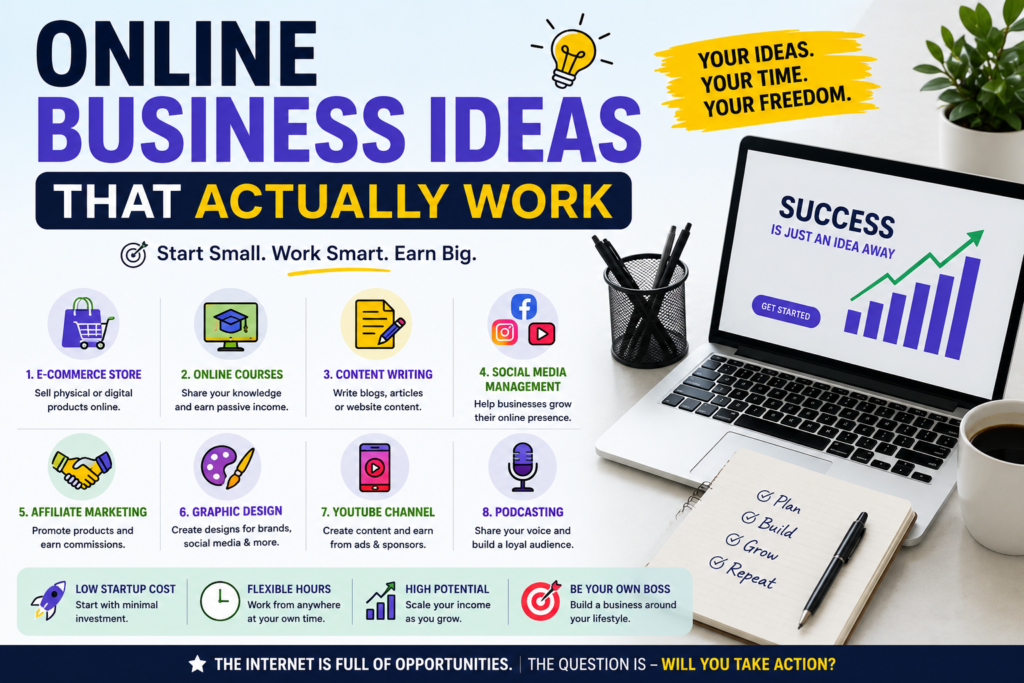
Turns out I had picked a decent idea but executed it terribly. Wrong niche, no marketing plan, and designs nobody actually wanted. It took two more attempts before something finally clicked.
Since then I’ve built, tested, and abandoned more online business ideas than I’d like to admit, and a few actually turned into real income. Not overnight riches, nothing like those screenshots people post of fake income dashboards, but steady, legitimate money that grew from consistent effort.
If you’re looking at online business ideas wondering which ones are legit versus which ones are just repackaged nonsense, here’s what I’ve learned from actually doing this, including the parts that went sideways.
1. Print on Demand Stores
My first business, and also my first lesson in how much research matters before launching anything.
Print on demand lets you sell custom designs on shirts, mugs, or hoodies without holding any inventory. A company like Printful or Printify handles printing and shipping once someone orders, and you keep a share of the profit.
My mistake was picking generic designs nobody actually searched for. Once I switched to a specific niche, dog breed lovers, and researched what people were actually searching for on Etsy, sales finally started moving.
Getting started
- Pick a niche with genuine passionate buyers, hobbies, pets, professions work well.
- Connect a Printful or Printify account to Etsy or Shopify.
- Research trending search terms using Etsy’s own search bar suggestions.
- Start with five to ten designs and see what resonates before scaling up.
2. Freelance Writing or Editing
I picked up freelance writing almost by accident after helping a friend fix up his resume, and people started asking if I did that professionally.
Platforms like Upwork and Fiverr connect freelancers with clients needing blog posts, website copy, resumes, or editing work. I started charging embarrassingly low rates just to build a portfolio, then raised prices once I had actual reviews backing me up.
Steps to start
- Create a simple portfolio, even three sample pieces work for starting out.
- Set up profiles on Upwork, Fiverr, or Contra.
- Apply to smaller gigs first to build reviews and credibility.
- Gradually raise your rates as your portfolio and testimonials grow.
The biggest lesson I learned here is that clients pay for reliability just as much as skill. Meeting deadlines consistently got me more repeat work than any writing talent alone.
3. Selling Digital Products

A friend of mine makes a genuinely impressive income selling Notion templates, and watching her build that pushed me to try something similar with simple planner templates.
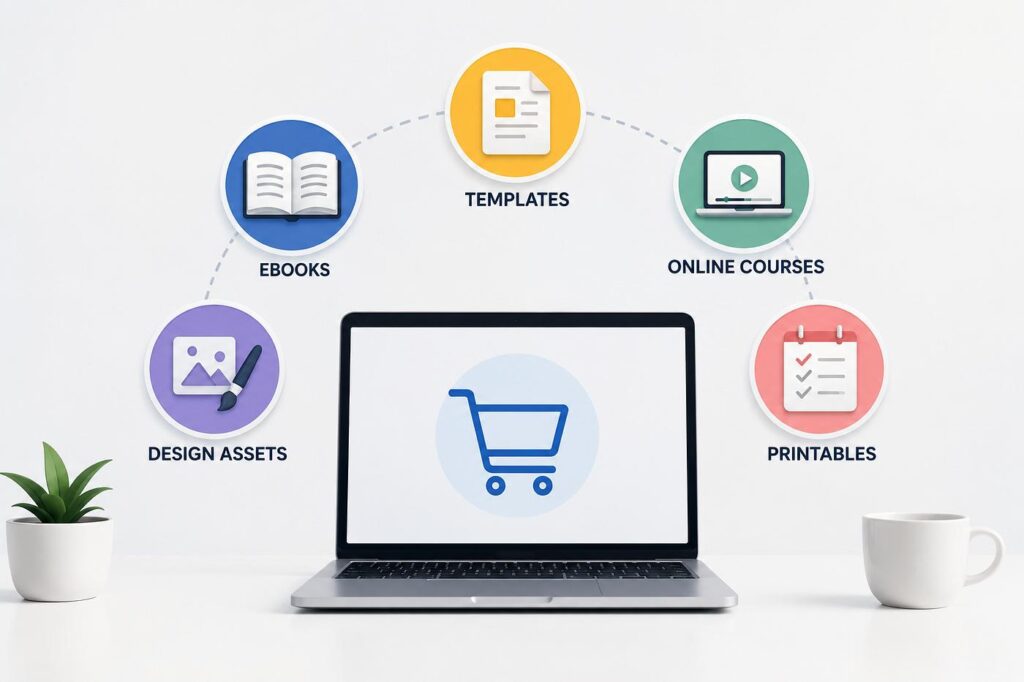
Digital products, templates, printables, guides, courses, only need to be created once and can be sold repeatedly without reprinting or reshipping anything.
My first templates barely sold because they looked amateurish. Learning basic design through Canva made an enormous difference once I actually put effort into visual presentation.
How to start
- Identify a specific problem your product solves, budgeting, meal planning, productivity tracking.
- Design it using Canva or Figma, both have free versions.
- List it on Etsy, Gumroad, or your own simple website.
- Promote through Pinterest, which drives surprisingly strong traffic for digital products.
4. Dropshipping, Done Carefully
Dropshipping gets a bad reputation because so many people jump in expecting overnight success, then quit within weeks when it doesn’t happen.
The model itself is simple. You sell products through your own store, built on Shopify, and a supplier ships directly to the customer without you ever touching inventory.
My first dropshipping store failed because I picked trendy, low-quality products with no real demand behind them. My second attempt succeeded modestly because I focused on a specific niche, camping gear, and built genuine content around it instead of just running random ads.
Realistic steps
- Choose a niche you understand or genuinely care about.
- Research suppliers through platforms like Spocket or CJ Dropshipping for better quality control.
- Build a simple, trustworthy-looking Shopify store.
- Start with organic content, TikTok or Instagram, before spending on ads.
5. Online Coaching or Consulting
A former coworker turned her marketing expertise into a coaching business after getting laid off, and it genuinely surprised me how quickly she found paying clients.
If you have real expertise in something, marketing, fitness, career advice, finances, people are willing to pay for direct guidance rather than sifting through free content themselves.
Steps to launch
- Define exactly who you help and what specific problem you solve.
- Offer a few free or discounted sessions initially to gather testimonials.
- Use a simple booking tool like Calendly alongside Zoom for calls.
- Share genuine expertise publicly on LinkedIn or Instagram to build credibility.
6. YouTube Channel Around a Specific Niche
I started a small YouTube channel about home organization mostly for fun, never expecting it to generate income. Eighteen months later, ad revenue and affiliate links from that channel cover my grocery bill most months.
YouTube monetization comes from several places, ad revenue through the YouTube Partner Program, sponsorships, and affiliate links in video descriptions.
Growth was painfully slow at first. My early videos barely reached fifty views. Consistency and improving video quality gradually, not dramatically, made the real difference over time.
Realistic approach
- Pick a specific, focused niche rather than a broad general topic.
- Post consistently, even once weekly beats sporadic uploads.
- Study what similar successful channels are doing without directly copying them.
- Apply for the YouTube Partner Program once you hit the required watch hours and subscribers.
7. Blogging With Affiliate Marketing
My blog took nearly a year before generating any meaningful income, and I almost shut it down twice during that stretch.
Blogging combined with affiliate marketing means writing genuinely helpful content and recommending relevant products, earning a commission through platforms like Amazon Associates or ShareASale when readers purchase through your links.
The turning point came once I stopped writing generic content and started answering extremely specific questions people were actually searching for on Google.
Steps to start
- Choose a niche with clear buying intent, tech reviews, home improvement, personal finance work well.
- Build the blog using WordPress with basic SEO plugins like Yoast.
- Write detailed, genuinely useful content answering specific questions.
- Apply to relevant affiliate programs once you have consistent traffic.
8. Selling Handmade or Vintage Items on Etsy
My sister sells handmade candles on Etsy as a side income, and watching her build that taught me a lot about niche products and genuine craftsmanship mattering more than mass appeal.
Etsy works particularly well for handmade goods, vintage finds, or unique craft items that larger retailers don’t offer.
Her early mistake was underpricing everything out of fear nobody would buy at fair prices. Once she adjusted pricing to properly reflect materials and time invested, profit margins finally made sense.
Getting started
- Research similar successful shops for pricing and presentation ideas.
- Take genuinely good photos, natural lighting makes an enormous difference.
- Write detailed, keyword-rich product descriptions.
- Start with a smaller inventory and expand based on what actually sells.
9. Virtual Assistant Services

A friend transitioned from an office job into virtual assistant work after having her second child, needing flexible hours around her family.
Virtual assistants handle tasks like email management, scheduling, social media posting, or basic bookkeeping remotely for business owners who need support without hiring full-time staff.
How to start
- List specific skills you can offer, calendar management, email organization, content scheduling.
- Create profiles on Upwork, Belay, or Fancy Hands.
- Start with smaller clients to build reviews and confidence.
- Gradually specialize in a particular industry once you find your strength.
10. Selling Stock Photos or Videos
I uploaded a batch of photos I’d taken during a hiking trip to Adobe Stock almost as an afterthought, and they’ve generated small but consistent passive income ever since.
Platforms like Adobe Stock, Shutterstock, and Unsplash Plus allow photographers and videographers to earn royalties whenever someone downloads their content.
This isn’t going to replace a full income quickly, but it’s a genuinely passive stream once you have a decent library built up.
Getting started
- Focus on commonly searched themes, business settings, everyday lifestyle moments, nature.
- Ensure proper lighting and composition, quality matters significantly.
- Upload consistently across multiple platforms to maximize reach.
- Tag images accurately with relevant keywords for discoverability.
Common Mistakes I See People Make
Jumping between ideas too quickly ruins most beginners before they give any single idea enough time to actually work.
Copying someone else’s exact business model without adapting it to your own strengths usually falls flat.
Underpricing products or services out of fear, then struggling to raise prices later once expectations are already set low.
Expecting overnight results instead of understanding that most successful online businesses took months, sometimes years, of consistent effort before becoming profitable.
Things Worth Keeping in Mind
Every online business idea listed here requires genuine effort, patience, and willingness to adjust based on what actually works rather than what you initially assumed would work.
None of these guarantee income, and results vary significantly depending on niche, effort, market conditions, and a fair amount of trial and error along the way.
Starting small, testing carefully, and reinvesting profits gradually tends to work far better than pouring significant money into an untested idea immediately.
Final Thoughts
Looking back at that eleven-dollar t-shirt store, I don’t regret starting it despite how badly it failed. It taught me more about actually running a business than any course or article could have.
Every idea on this list has genuine potential, but none of them succeed purely from picking the “right” idea. They succeed from showing up consistently, adjusting based on real feedback, and treating early failures as information rather than a reason to quit.
Pick whichever idea genuinely interests you, start smaller than feels impressive, and give it enough time to actually prove itself one way or another.