

Last winter I answered a Slack message at 11:47 PM while sitting on my kid’s bedroom floor, halfway through reading her a bedtime story. She asked me why I kept looking at my phone instead of the book. I didn’t have a good answer for her. That moment stuck with me more than any productivity podcast or LinkedIn post ever could.
If you’re reading this, chances are you’ve had a version of that same moment. Maybe it wasn’t a bedtime story. Maybe it was missing your friend’s birthday dinner because a client emailed “urgent” at 6 PM on a Friday. Or maybe it’s just the quiet exhaustion of feeling like you’re always half at work and half at home, never fully present anywhere.
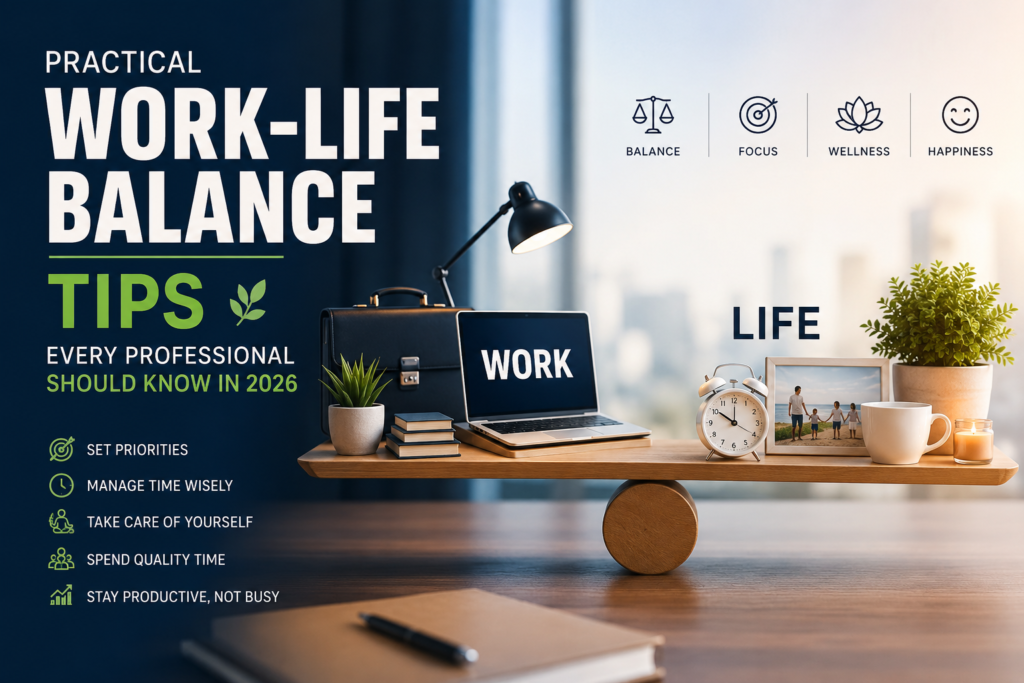
Work-life balance isn’t some fluffy corporate buzzword anymore. In 2026, with remote work, hybrid schedules, AI tools speeding up everything, and phones that never really let us log off, the line between “work” and “life” has basically dissolved for a lot of us. So this article isn’t going to give you the tired advice of “just unplug more” or “take a bubble bath.” Instead, I want to walk through what has actually worked for me and for people I’ve talked to, including the mistakes that taught me the most.
Why This Feels Harder Than It Used To
A few years ago, work-life balance mostly meant leaving the office at 5 PM and not thinking about your job until the next morning. Simple enough, at least in theory.
Now things are different. Many of us work from home, which sounds great until you realize your bedroom is also your office and your laptop is always three feet away. Add in AI assistants that let us produce more output in less time, which somehow leads to higher expectations rather than more free time. Then there’s the always-on culture where a “quick question” on Teams or Slack can land at any hour.
I used to think the problem was just poor time management. Turns out, that was only part of it. The bigger issue was that I had no boundaries, and nobody was going to hand them to me. I had to build them myself.
The Turning Point: When I Realized Something Had to Change
For about a year, I was proud of how “available” I was. I answered emails during dinner. I took calls during my lunch break. I genuinely thought this made me a dedicated employee.

Then I got sick. Nothing dramatic, just a bad flu that knocked me out for a week. During that week, nothing at work fell apart. Projects moved forward. My inbox got handled by my team. The company survived just fine without my constant presence.
That was humbling. It made me realize I had built an identity around being “always on” that the business itself didn’t actually need. That was the moment I decided to rebuild how I worked, not just for my career, but for my sanity.
Step-by-Step: Building Boundaries That Actually Stick
Here’s the framework I use now. It’s not perfect, and some weeks I slip, but it holds up far better than anything I tried before.
Step 1: Define Your Actual Work Hours (And Write Them Somewhere Visible)
This sounds basic, but most people never actually decide when their workday ends. They just work until they run out of energy or until guilt kicks in.
I picked 8:30 AM to 5:30 PM. I put it in my email signature. I set it as a status update on Slack. I told my manager directly, not as a request, but as information: “Just so you know, I’m generally offline after 5:30 unless something is genuinely urgent.”
Nobody pushed back. Honestly, most people respected it more once I stated it clearly.
Step 2: Turn Off Notifications, Not Just Silence Them
Silencing notifications isn’t enough because you still see the little red dot calling to you. I went into my phone settings and completely disabled notifications for Slack, Outlook, and Teams after my work hours. On iPhone, this is under Focus mode, where you can create a custom “Work Off” profile that only allows calls from close family.
If you use Android, the Digital Wellbeing app lets you schedule app pauses automatically. I set mine to lock work apps at 6 PM and unlock them at 8 AM.
Step 3: Batch Your Communication Instead of Reacting Constantly
I used to check email the second it arrived. Now I check it three times a day: morning, right after lunch, and before wrapping up. Everything else waits.
This single change gave me back roughly ninety minutes a day. Not because I stopped working, but because I stopped interrupting myself.
Step 4: Protect One Non-Negotiable Personal Activity
For me, it’s a twenty-minute walk after lunch, no phone. For my sister, it’s picking up her daughter from school every day at 3 PM, no exceptions. For a friend of mine who works in finance, it’s a gym session at 6 AM before the market opens.
The activity matters less than the consistency. Once it’s non-negotiable, your brain stops treating it as optional.
Step 5: Use Calendar Blocking Like a Bodyguard
I started blocking my calendar not just for meetings, but for lunch, for focused work, and even for personal appointments. If it’s not on the calendar, people assume you’re free. If it’s blocked, most colleagues respect it without question.
Tools like Google Calendar or Outlook Calendar work fine for this. You don’t need anything fancy. The trick is treating personal time blocks with the same seriousness as a client meeting.
Real Tools That Actually Help (Not Just Hype)
A lot of productivity content pushes tools without explaining how they actually fit into daily life. Here’s what I genuinely use and why.

Notion helps me separate work projects from personal goals in one place, so I’m not mentally juggling five different apps.
Forest app locks my phone during focus sessions by growing a virtual tree that dies if I leave the app. It sounds silly, but the guilt of killing a tiny digital tree actually keeps me off Instagram.
Toggl Track showed me something eye-opening: I was spending nearly two hours a day on “quick check-ins” that added up to almost a full workday every week. Seeing the real numbers changed my habits faster than any advice ever did.
Google Calendar’s “Working Hours” feature automatically warns people when they try to schedule a meeting outside your set hours. It’s a small thing, but it quietly enforces boundaries without you having to say anything awkward.
None of these tools fix the problem by themselves. They just make it easier to follow through on decisions you’ve already made.
Common Mistakes People Make (I Made Most of These)
Mistake 1: Believing balance means a 50/50 split every single day. Some days work will demand more. Some days life will demand more. Balance is measured over weeks and months, not hours.
Mistake 2: Waiting for permission to set boundaries. Nobody is going to walk up to you and say, “Hey, please stop working so much.” You have to claim that space yourself.
Mistake 3: Confusing busyness with productivity. I used to feel accomplished after a day full of meetings, even if I hadn’t finished a single meaningful task. Being busy and being effective are not the same thing.
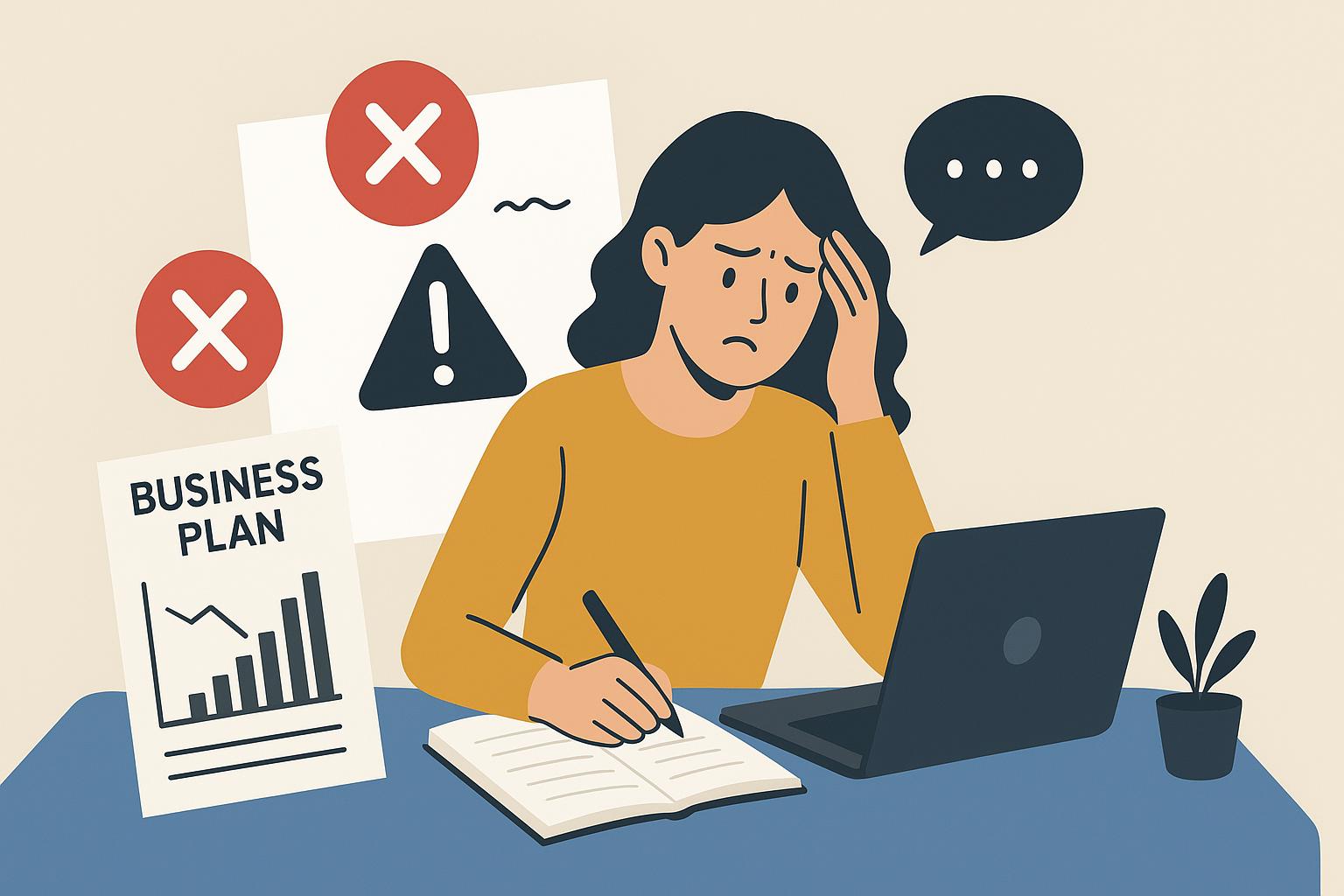
Mistake 4: Ignoring physical signs of burnout. Headaches, irritability, trouble sleeping. I ignored all of these for months because I thought pushing through was a sign of strength. It wasn’t. It was just delaying an inevitable crash.
Mistake 5: Treating weekends as catch-up time. For a long stretch, I used Saturdays to “get ahead” on work. All that did was erase the only real recovery time I had, which made Mondays even harder.
A Real Example: How My Friend Fixed Her Burnout Without Quitting Her Job
My friend Sara works as a project manager at a marketing agency. Two years ago, she was averaging fifty five hour work weeks and barely sleeping six hours a night.
Instead of quitting, she made three changes. First, she stopped taking calls after 6 PM, period. Second, she delegated tasks she had been holding onto out of a need for control, not necessity. Third, she started using Asana to track deadlines so she wasn’t mentally carrying every task in her head all day.
Within two months, her sleep improved. Within four months, her performance reviews actually got better, not worse, because she was more focused during work hours instead of dragging herself through exhaustion.
Her situation isn’t unique. Most burnout stories I’ve heard follow the same pattern: too much invisible mental load, not enough clear boundaries, and a fear that setting limits will hurt career growth. In Sara’s case, and in mine, the opposite happened.
What Balance Actually Looks Like Day to Day
Balance doesn’t look like a perfectly organized planner or a Pinterest-worthy morning routine. For me, it looks like this on a normal Tuesday.
I wake up, skip checking my phone for the first thirty minutes, and have coffee while it’s still quiet. I work focused blocks from 9 to 11, take a real lunch away from my desk, handle meetings in the afternoon, and log off by 5:30. In the evening, I might cook dinner, watch something mindless, or just sit outside for ten minutes doing absolutely nothing productive.
Some days this falls apart completely. A deadline shifts, a client calls late, my kid gets sick. That’s normal. The goal isn’t perfection. The goal is having a default pattern to return to once the chaos passes.
Handling Pushback From Your Workplace
Not every workplace makes this easy. Some managers genuinely expect constant availability, and setting boundaries there can feel risky.
If that’s your situation, start small. Instead of announcing a dramatic change, quietly stop responding after hours for two weeks and observe what actually happens. In most cases, nothing breaks. If your manager specifically calls you out for it, that’s useful information about the culture you’re working in, and it might be worth having an honest conversation or eventually looking elsewhere.
I’m not saying quit your job over this. I’m saying pay attention to whether your workplace respects boundaries or quietly punishes them. That tells you a lot about your long-term options there.
Balance for Remote Workers Specifically
If you work from home, the physical separation between work and life barely exists, so you have to create it artificially.
I know people who literally change clothes at the end of their workday, even though nobody sees them, just to signal to their brain that work is over. Others close their laptop and physically put it in a drawer. One coworker of mine takes a short walk around the block at 5:30 to simulate a “commute” home, even though she never left the house.
These might sound like small rituals, but they work because your brain needs signals, not just intentions.
Final Thoughts
Work-life balance in 2026 isn’t about finding some magical formula that fixes everything overnight. It’s built through small, repeated decisions: logging off when you said you would, protecting one personal habit fiercely, being honest with your manager about your limits, and forgiving yourself on the days it doesn’t go perfectly.
I still catch myself glancing at my phone during moments that deserve my full attention. But it happens far less than it used to, and when it does happen, I notice it and course correct instead of ignoring it.
That night with my daughter and the bedtime story became the reason I changed how I work. You don’t need a dramatic wake up call to start making changes though. You can start today, with one boundary, one tool, one small shift in how you spend your evening.
Your job will still be there tomorrow. The moments you’re missing right now won’t be.