

My accountant called me in January with news I genuinely didn’t expect. Our cash flow problems weren’t from spending too much. They came from underestimating exactly how much costs had crept up over the past year, supplier prices, insurance, even our commercial rent renewal.
That call kicked off a genuinely eye-opening few months of research into what’s actually changing for small businesses right now. Not vague predictions from a decade-old business book, but real shifts happening in 2026 specifically.
I run a small retail and online business, and I’ve spent the last several months adjusting how we operate based on what I found. Some changes were obvious once I saw the data. Others genuinely surprised me.
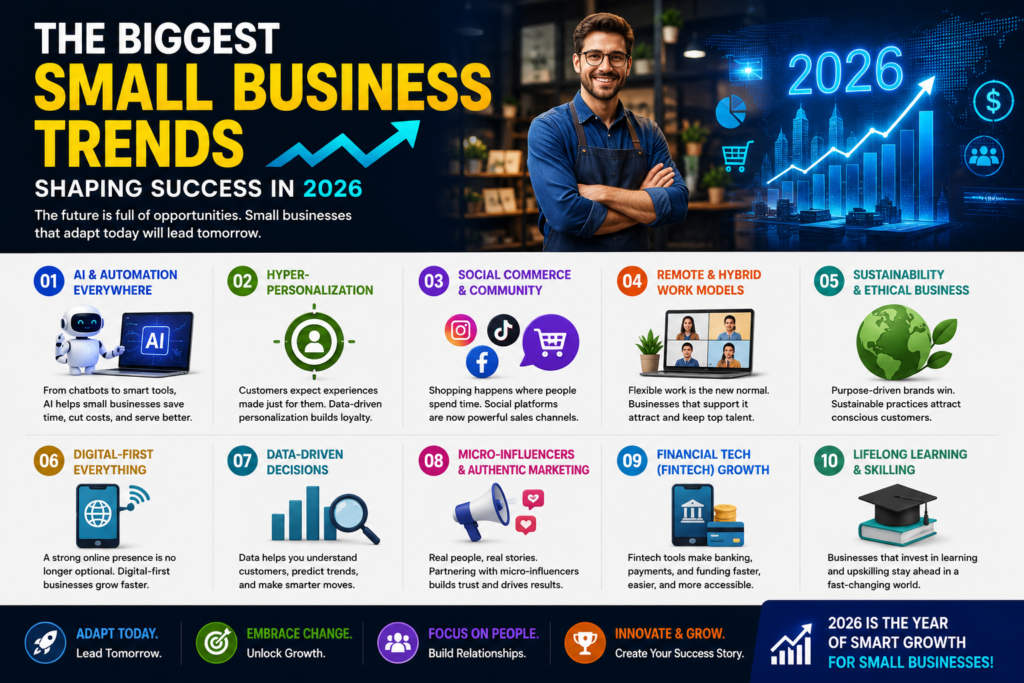
Here’s what’s actually shaping small business success this year, based on real numbers and my own experience adapting alongside them.
AI Adoption Has Moved Past the Experimentation Phase
I dismissed AI tools for years, assuming they were mostly hype aimed at bigger companies with dedicated tech teams.
Turns out that assumption cost me time. Roughly 58% of small businesses now use generative AI regularly, up sharply from 40% just two years ago. This isn’t a future trend anymore. It’s already standard practice for most competitors.
How I actually started using it
- Identified my most repetitive weekly task, customer email responses, in my case.
- Tested a simple AI chatbot tool for handling common customer questions automatically.
- Trained the tool using our actual FAQ content rather than generic templates.
- Reviewed its responses weekly for the first month before trusting it fully.
Within six weeks, I reclaimed roughly six hours weekly that used to go toward answering the same handful of questions repeatedly.
A mistake worth avoiding
I initially let an AI scheduling tool run completely unsupervised, assuming it would handle everything correctly. It double-booked two appointments before I caught the issue. Reviewing AI output regularly, especially early on, matters more than people expect.
Cash Flow Is Now the Number One Operational Challenge
Inflation cooled somewhat from its earlier peaks, but costs never actually came back down. Supplier prices, insurance premiums, and commercial rent have all reset at higher baselines that many businesses haven’t fully adjusted their pricing to match.
My own business felt this directly. Revenue looked fine on paper some months, yet actual cash available for bills didn’t match up properly in timing.
Steps that actually helped
Review financial statements monthly instead of only during tax season. Track incoming and outgoing cash weekly rather than monthly. Keep a cash reserve specifically for slower periods rather than assuming steady revenue will always arrive predictably.
Tools like Wave or QuickBooks made this dramatically easier once I committed to checking them consistently instead of occasionally.
Customers Expect Genuine Personalization Now

I used to send the exact same promotional email to my entire customer list, assuming a good discount would work regardless of who received it.
Research shows 61% of customers feel most companies treat them as just a number. Meanwhile, 77% say they’re more likely to purchase when they receive genuinely relevant product recommendations.
What I changed
I started segmenting my email list based on actual past purchases rather than treating everyone identically. A customer who bought hiking gear gets different recommendations than someone who bought home decor. Simple, but the difference in engagement was immediate and measurable.
Flexible Work Arrangements Remain a Competitive Advantage
I resisted remote work options for my small team initially, assuming productivity would suffer without direct daily oversight.
Research consistently shows the opposite. A notable percentage of employees report being more productive working from home, and businesses supporting flexible arrangements tend to retain talent more effectively than those requiring strict in-office schedules.
A hybrid approach that worked for us
We settled on three in-office days weekly with flexibility for the remaining two, adjusted based on specific role requirements. Retention improved noticeably within a few months of making this change permanent rather than experimental.
No-Code Tools Are Leveling the Playing Field

Building a custom booking system or inventory tool used to mean hiring a developer, an expense my small business genuinely couldn’t justify for years.
No-code platforms changed that completely. Tools like Bubble, Airtable, and Glide let non-technical business owners build functional custom applications without hiring anyone.
Getting started with no-code tools
- Identify a specific workflow problem generic software doesn’t solve well for your business.
- Research no-code platforms specifically built for that type of solution.
- Start with a free trial or basic plan before committing financially.
- Build a simple version first, then expand functionality gradually based on actual use.
I built a custom appointment scheduling tool through Airtable that fit our exact workflow, something off-the-shelf software never quite managed properly.
Cybersecurity Can No Longer Be an Afterthought

A friend running a small accounting firm got hit with a phishing attack last year that genuinely threatened her entire client database.
That story pushed me to actually prioritize security seriously. Nearly 59% of small businesses reported experiencing a cyberattack within the past year, and the costs go well beyond immediate financial loss, reputational damage lingers considerably longer.
Basic protections worth implementing immediately
Require multi-factor authentication across all business accounts. Use a password manager like 1Password or Bitwarden instead of reusing passwords across platforms. Conduct a basic security review annually, even a simple checklist from CISA’s website helps identify obvious gaps.
Multiple Revenue Streams Are Becoming the Norm
I ran a single-focus retail business for years, assuming diversifying would dilute our brand and confuse customers.
Businesses combining two or more distinct revenue streams under one roof, sometimes called multi-hyphenate businesses, are increasingly common and tend to build stronger customer loyalty through varied offerings.
How we diversified carefully
We added a small consulting service related to our core retail product, helping customers set up systems we already sold them. This didn’t dilute our brand. It actually strengthened customer relationships by extending genuine value beyond a single transaction.
Contactless and Mobile Payments Keep Growing
I resisted upgrading our payment system for longer than I should have, assuming our existing card reader was perfectly sufficient.
Roughly 46% of people now make contactless payments weekly, and mobile checkout continues expanding steadily across nearly every retail category.
Simple upgrade path
Contact your current payment processor about contactless and mobile wallet support, most modern systems from Square or Clover already include this. Test the updated system with staff before rolling it out publicly, and update any signage mentioning accepted payment methods.
Financial Resilience Matters More Than Aggressive Growth

For years I chased growth aggressively, reinvesting nearly every available dollar back into expansion without maintaining much of a safety cushion.
Given continued economic uncertainty, many small businesses are shifting focus toward financial resilience rather than growth at any cost. This means better forecasting, smarter cash reserves, and more selective investment decisions.
Building resilience without stalling growth
Set aside a specific percentage of monthly revenue, even five percent, into a dedicated reserve fund before allocating anything toward expansion. Review growth opportunities against actual cash flow capacity rather than optimistic projections alone.
Sustainability Continues Influencing Customer Decisions
I assumed sustainable practices mattered mostly to a small, niche customer segment rather than my broader customer base.
Close to half of customers now prioritize sustainable products when shopping, and simple changes like recyclable packaging or a product refill program genuinely influence purchasing decisions for a meaningful portion of buyers.
A manageable starting point
Start with one visible change, switching to recyclable packaging, for example, rather than attempting a complete sustainability overhaul immediately. Communicate the change clearly to customers rather than assuming they’ll notice on their own.
Common Mistakes I Made Along the Way
Ignoring AI tools for years out of assumption rather than actually testing anything myself.
Ignoring cash flow tracking until problems became genuinely urgent instead of catching warning signs earlier.
Treating all customers identically instead of using data I already had access to for basic personalization.
Delaying cybersecurity improvements simply because a breach hadn’t happened to us personally yet.
A Few Things Worth Remembering
Every industry experiences these trends somewhat differently, so what mattered significantly for my retail business might apply differently to a service-based company or a restaurant.
Economic conditions continue shifting throughout the year, and staying genuinely informed through reliable sources matters more than reacting to any single prediction, including the ones outlined here.
Adopting every trend simultaneously isn’t realistic for most small teams. Prioritizing based on your specific biggest current bottleneck tends to produce better results than spreading efforts too thin across everything at once.
Final Thoughts
That call from my accountant back in January turned into one of the more genuinely useful wake-up calls I’ve had running this business. Not because the news was good, but because it forced me to actually look closely at what was changing around us instead of assuming things would sort themselves out.
Small businesses that adapt deliberately, rather than reactively scrambling once problems become urgent, tend to come out ahead. Pick one or two trends from this list that align most closely with your current challenges, and start there rather than trying to overhaul everything simultaneously.
Chances are good you’ll find, like I did, that the adjustment feels far more manageable once you actually get started.