


I answered a work email at my daughter’s school recital three years ago. Not during intermission, not during a quiet moment, but while she was actually performing. I looked up just in time to catch the last few seconds of her song, and the look on her face afterward stuck with me for weeks.
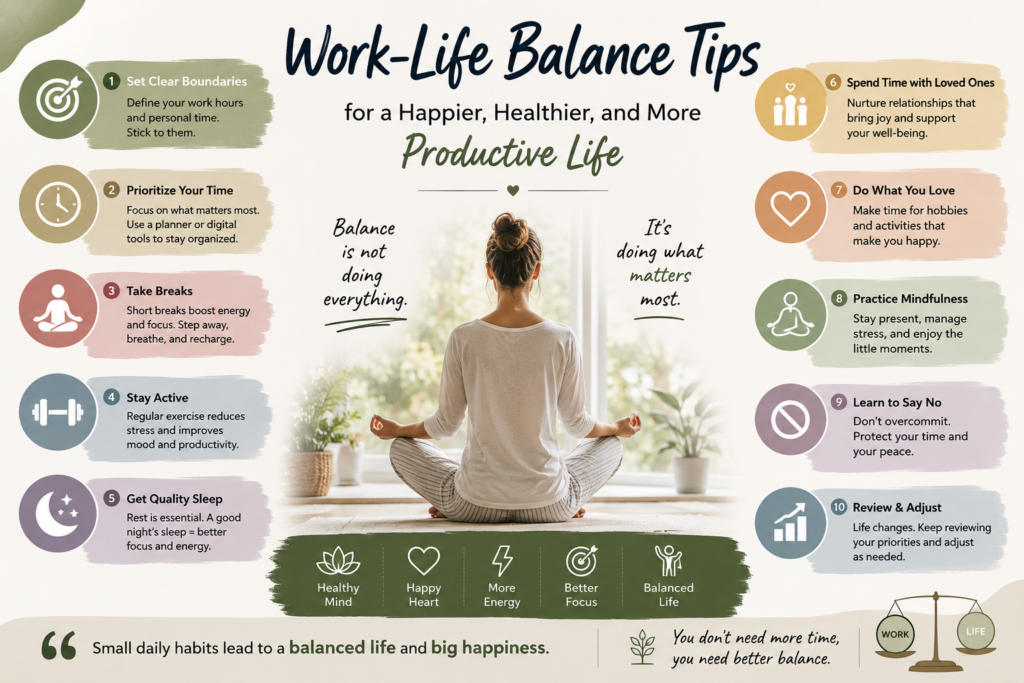
That moment forced me to admit something I’d been avoiding. My work-life balance wasn’t just a little off. It had basically stopped existing altogether.
Fixing it took longer than I expected, and honestly involved a fair number of failed attempts before anything actually stuck. Some advice I tried made things worse temporarily. Other changes helped almost immediately in ways I didn’t anticipate.
Here’s everything I actually learned through that process, the stuff that genuinely worked and the mistakes worth skipping entirely.
Why This Actually Matters Beyond Just Feeling Less Tired
I used to think work-life balance was a nice-to-have, something reserved for people with less demanding jobs than mine.
Turns out chronic overwork affects far more than just energy levels. Sleep quality suffers, relationships strain under constant distraction, and productivity actually drops the longer you push through exhaustion rather than addressing it directly.
Recognizing that connection between rest and actual performance changed how seriously I took this whole topic.
1. Set Actual Work Hours and Defend Them
I worked whenever my phone buzzed for years, treating every notification as equally urgent regardless of the actual time or day.
Setting defined work hours, and genuinely sticking to them, made an enormous difference almost immediately.
How I implemented this
- Chose specific start and end times based on when I’m actually most productive.
- Turned off work email notifications outside those hours using my phone’s Focus Mode.
- Communicated these hours clearly to coworkers and clients through a simple email signature note.
- Allowed genuine exceptions only for true emergencies, not routine requests that felt urgent but weren’t.
The first week felt uncomfortable, like I was neglecting responsibilities. After that adjustment period, most work situations sorted themselves out fine without my constant availability.
2. Use Time Blocking Instead of an Endless To-Do List
My to-do list used to stretch endlessly, adding new tasks faster than I ever completed old ones. That constant visual reminder of unfinished work followed me home mentally every single evening.
Time blocking, assigning specific tasks to specific chunks of your calendar rather than a vague running list, changed how manageable everything felt.
Setting this up
Open a calendar app like Google Calendar, and block out specific times for focused work, meetings, and even breaks. Treat those blocks as seriously as you’d treat an actual meeting with someone else.
I use this system daily now, and the simple act of seeing my day structured visually reduces mental clutter significantly.
3. Build in Actual Breaks, Not Just Lunch

I used to eat lunch at my desk while continuing to answer emails, convincing myself that counted as taking a break.
It didn’t. Genuine breaks, away from screens entirely, matter far more than I realized.
A simple approach that worked
Try the Pomodoro method, twenty-five minutes of focused work followed by a five-minute break, using an app like Forest or a basic kitchen timer. Step outside during at least one break daily, even just for a few minutes.
Something as small as stepping outside briefly noticeably improved my afternoon focus compared to staying glued to my desk continuously.
4. Learn to Say No Without Over-Explaining
I used to accept nearly every request that came my way, worried that declining would make me look uncommitted or difficult to work with.
That habit led directly to overcommitment and constant background stress about deadlines I’d agreed to without really thinking through capacity first.
A simple way to practice this
Pause before automatically agreeing to new requests. Ask yourself honestly whether you actually have capacity, not whether you feel obligated. Respond with a brief, professional decline when needed, something like “I’m not able to take this on right now, but thank you for thinking of me.”
Nobody’s reacted negatively yet. Most people respect a clear, calm no far more than I expected.
5. Separate Physical Workspaces From Rest Spaces

Working from my couch felt convenient during the early days of remote work, until I noticed I couldn’t relax on that same couch anymore without feeling vaguely stressed.
Physical separation between where you work and where you rest matters more than it initially seems.
Creating this separation at home
Designate a specific spot, even a small desk in a corner, exclusively for work. Avoid working from your bed or couch if remotely possible. Physically leave that workspace at the end of your work hours, even just standing up and walking to another room signals a mental shift.
6. Batch Similar Tasks Together
Constantly switching between emails, calls, and focused project work fragmented my attention throughout the day, leaving me feeling busy but somehow unproductive by evening.
Batching similar tasks together, checking email only during designated windows rather than continuously throughout the day, improved my actual output noticeably.
A simple batching schedule
Check email three set times daily, morning, early afternoon, and before finishing work, rather than continuously. Group calls together during a specific block rather than scattering them throughout your day.
7. Use Technology to Protect Your Time, Not Consume It
Ironically, my phone contributed heavily to my imbalance for years, constant notifications pulling my attention regardless of what I was actually doing.
Using specific apps intentionally, rather than just scrolling reactively, flipped that relationship somewhat.
Tools that genuinely helped
Toggl Track helped me understand where my actual hours were going, often revealing surprising time drains I hadn’ t noticed. Calendly automated scheduling, eliminating repetitive back-and-forth emails. Headspace or Calm provided short guided breathing exercises during particularly stressful days.
8. Prioritize Sleep Like It’s an Actual Appointment

I treated sleep as flexible for years, the first thing sacrificed whenever deadlines piled up.
Poor sleep directly worsened my focus, patience, and decision-making the following day, creating a frustrating cycle where less sleep led to less efficient work, which led to even less sleep trying to catch up.
Building better sleep habits
Set a consistent bedtime, even on weekends. Avoid screens for thirty minutes before bed if possible, or at minimum use night mode settings. Keep your bedroom specifically for sleep rather than working from bed occasionally.
9. Schedule Personal Time With the Same Seriousness as Work Meetings
I used to assume personal time would naturally happen once work obligations cleared up. It never did, because work obligations never actually fully cleared up.
Scheduling personal activities directly into your calendar, exercise, family dinners, hobbies, protects that time the same way a client meeting would be protected.
How I implemented this
I blocked out three evenings weekly for genuinely unstructured personal time, treating those blocks as non-negotiable appointments rather than flexible suggestions I’d cancel under pressure.
10. Recognize the Difference Between Busy and Productive
I confused constant activity with genuine productivity for years, filling every hour without actually evaluating whether that time moved anything meaningful forward.
A helpful weekly check-in
Ask yourself each Friday which two or three accomplishments genuinely mattered that week. If the list feels thin despite feeling constantly busy, that’s usually a sign of misplaced priorities rather than insufficient effort.
Real Examples From My Own Adjustment Period
Setting defined work hours initially felt like I was letting colleagues down, until I realized most urgent-feeling requests could actually wait until the next business day without any real consequence.
Time blocking exposed just how much time I’d been losing to unstructured multitasking, switching between tasks constantly without completing much of anything properly.
Sleep improvements took the longest to show clear results, roughly three weeks of consistency before I genuinely noticed a difference in daytime focus and mood.
Common Mistakes People Make Trying to Improve Balance
Attempting a complete lifestyle overhaul all at once, then abandoning everything within a week once the changes feel overwhelming rather than sustainable.
Treating work-life balance as something to achieve once and then forget about, rather than something requiring ongoing, regular adjustment as circumstances change.
Feeling guilty during personal time, mentally staying at work even while physically away from it, which undermines the entire purpose of taking a break in the first place.
Comparing your balance to someone else’s situation, when job demands, family responsibilities, and personal energy levels vary enormously between individuals.
A Few Things Worth Keeping in Mind
Everyone’s ideal balance looks different depending on career demands, family situation, and personal energy patterns, so treat these suggestions as a genuinely helpful starting point rather than a rigid formula.
If you’re consistently struggling with exhaustion, anxiety, or overwhelming stress that these adjustments don’t meaningfully improve, speaking with a doctor or therapist can help identify what’s actually going on beneath the surface.
Small, sustainable changes tend to stick far better than dramatic overhauls attempted all at once.
Final Thoughts
That recital moment still crosses my mind occasionally, usually as a reminder of how easily work can quietly take over everything else without you fully noticing until something forces the issue.
Work-life balance isn’t really about achieving some perfect, permanent equilibrium. It’s about noticing when things tip too far in one direction, and making small, consistent adjustments before something important gets missed entirely.
Pick one change from this list that addresses your biggest current struggle, and give it a genuine few weeks before judging whether it’s working. That’s really how every single change on this list started for me too.
If stress or anxiety feels like more than everyday tiredness right now, that’s worth mentioning to a doctor or counselor rather than pushing through it alone.