


Three years ago I had a morning where I sat in my car in a parking lot for twenty minutes before work, just staring at the steering wheel, unable to make myself walk inside. Nothing dramatic had happened. No crisis, no bad news. My brain had just quietly run out of gas, and I didn’t even notice until my body forced me to stop.
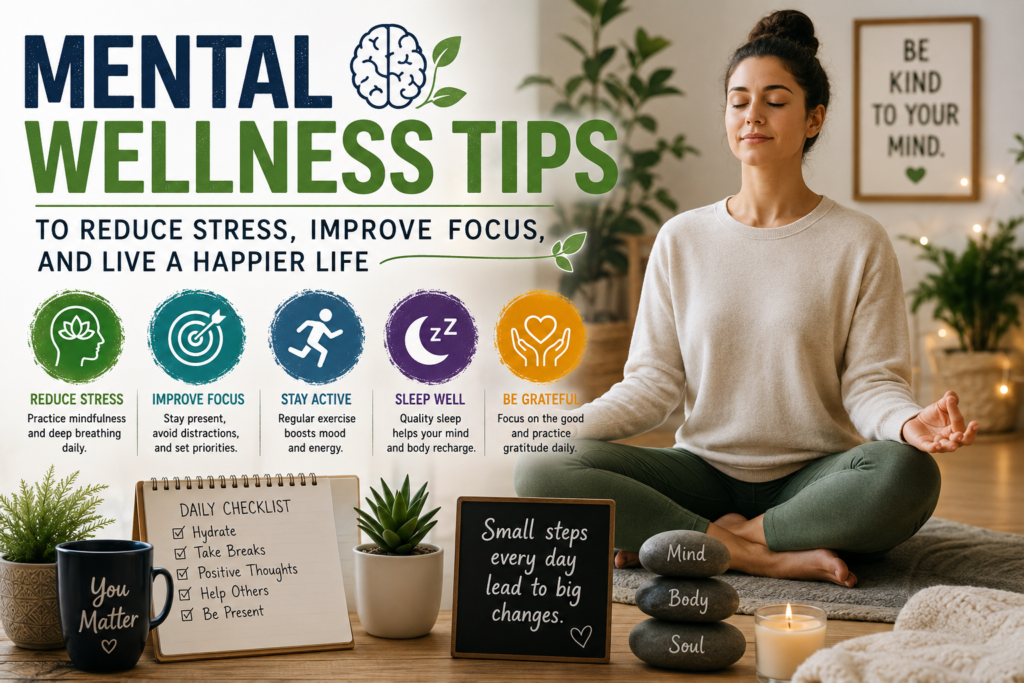
That morning became a turning point for me. Not because I fixed everything overnight, but because it finally pushed me to take mental wellness seriously instead of treating it like something I’d get around to eventually.
If you’re reading this because you’ve had your own version of that parking lot moment, or because focus has become nearly impossible, or because stress has quietly taken over your days, I want to share what actually helped me. Not vague advice pulled from a poster in a therapist’s waiting room, but real habits, tools, and mistakes from someone who’s lived through the trial and error.
Why Mental Wellness Isn’t Just a Trend
People throw the phrase “mental wellness” around so much that it’s started to sound like marketing copy. But underneath the buzzword, there’s something simple and real going on.
Your brain and body are constantly reacting to stress, sleep, food, movement, and relationships. When those things stay out of balance for too long, focus drops, patience shrinks, and your mood starts running the show instead of your intentions.
I learned this the hard way when I assumed I could out-hustle my burnout with more coffee and longer hours. That approach worked for about two weeks before my sleep, memory, and temper all fell apart at once.
Small Habits That Actually Reduced My Stress
Start With Your Mornings, Not Your To-Do List

For years, my first move every morning was checking email. Big mistake. Doing that trained my brain to associate waking up with pressure and urgency before my feet even touched the ground properly.
Now my first twenty minutes look completely different. I keep my phone in another room overnight, and when I wake up, I stretch, drink water, and sit quietly for a few minutes before touching any screen. It sounds almost too simple, yet this single change lowered my baseline anxiety more than anything else I tried.
Try the Two-Minute Breathing Reset
When stress spikes during the day, whether from a tense meeting or an overwhelming inbox, I use a technique a therapist once taught me. Breathe in for four seconds, hold for four seconds, breathe out for six seconds, and repeat this cycle five times.
It’s not magic, but it interrupts the spiral before it builds momentum. Apps like Calm and Insight Timer both have free guided versions if you want something to follow along with until it becomes automatic.
Move Your Body Even When You Don’t Feel Like It
I used to believe exercise was only worthwhile if it involved an hour at the gym. That belief kept me from doing anything most days because an hour felt impossible to fit in.
Once I lowered the bar to a fifteen-minute walk around my neighborhood, something shifted. Regular movement, even short bursts, noticeably improved my mood and made stressful thoughts feel less consuming. Research consistently backs this up too, showing that moderate physical activity reduces cortisol levels and boosts mood-regulating chemicals like serotonin and dopamine.
Improving Focus Without Forcing It
The Pomodoro Method Saved My Workdays

Focus felt impossible for me during a stretch where I was juggling too many projects at once. A coworker suggested the Pomodoro Technique, where you work in focused 25-minute blocks followed by a five-minute break.
I was skeptical at first, assuming short bursts couldn’t possibly replace long focused stretches. Turns out, my brain handled short sprints far better than marathon sessions. Apps like Forest and Focus To-Do make this easy to track, and Forest even grows a little virtual tree while you stay off your phone, which sounds silly but genuinely works as motivation.
Single-Tasking Beats Multitasking Every Time
I used to wear multitasking like a badge of honor. Writing an email while listening to a podcast while half-watching a video call felt productive, until I noticed I was making careless mistakes across all three.
Switching to single-tasking, one task with full attention before moving to the next, dramatically improved both my accuracy and how mentally tired I felt at the end of the day. Multitasking isn’t actually multitasking. It’s rapid switching, and every switch costs mental energy you don’t get back.
Protect Your Attention With Boundaries
Notifications quietly wrecked my focus for years before I addressed it directly. I finally turned off all non-essential notifications on my phone, keeping only calls and messages from close family visible on my lock screen.
That one change reduced how often I picked up my phone by more than half, based on my own screen time reports through Apple’s Screen Time feature. If you’re on Android, Digital Wellbeing offers similar tracking and app-limiting tools.
Step-by-Step Plan to Build a Calmer Daily Routine
Here’s the actual structure I follow now, broken down simply enough that you could start tomorrow morning.
Step one: Protect your first hour. Delay checking your phone for at least thirty minutes after waking up. Use that time for water, light stretching, or just sitting quietly.
Step two: Pick one stress tool and practice it daily. Whether it’s breathing exercises, journaling, or a short walk, consistency matters far more than variety here.
Step three: Time-block your focus work. Choose two or three periods during your day dedicated to deep, uninterrupted work. Even thirty minutes counts if it’s genuinely distraction-free.
Step four: Schedule a real break, not a scroll break. Step outside, stretch, or talk to someone in person. Scrolling social media during breaks often leaves people feeling more drained, not less.
Step five: Reflect briefly before bed. Spend two minutes writing down one thing that went well and one thing you’re carrying into tomorrow. This habit alone has helped me sleep better because my brain isn’t left holding unfinished thoughts.
Real Examples From People Around Me
My sister struggled with racing thoughts at night for years. She started using a simple notebook by her bed, writing down anything looping in her mind before sleep. Within a few weeks, her sleep improved enough that she mentioned it unprompted, which tells you it made a real difference.
A close friend who works in customer service dealt with constant irritability after back-to-back calls all day. He started taking five minutes between calls just to stand up and look out a window, disconnecting from the screen entirely. He told me it felt like giving his brain tiny resets throughout the day instead of one big burnout at the end.
Neither of these examples involved expensive programs or drastic life changes. Just small, repeatable actions that added up over time.
Common Mistakes People Make With Mental Wellness
Waiting for a crisis before making changes. I did this myself, waiting until my parking lot moment before taking stress seriously. Small daily habits work far better as prevention than as damage control.
Trying to change everything at once. Overhauling sleep, diet, exercise, and screen time simultaneously usually collapses within a week. Pick one habit, build consistency, then add another.
Confusing rest with scrolling. Lying in bed watching videos for two hours often feels like rest but leaves your brain just as stimulated as work does. Actual rest usually means quiet, low-stimulation activities.
Ignoring physical basics like sleep and hydration. No amount of mindfulness apps will fix chronic dehydration or five hours of sleep a night. Address the basics before adding advanced techniques.
Comparing your progress to someone else’s routine. What works for a friend’s morning routine might not fit your schedule or personality at all. Building your own version matters more than copying someone else’s system exactly.
When to Seek Extra Support
Personal habits genuinely help, but they aren’t a replacement for professional support when stress or anxiety becomes overwhelming or persistent. Therapists, counselors, and doctors can offer guidance tailored to your specific situation in ways a blog article simply can’t.
Platforms like BetterHelp and Talkspace have made therapy more accessible for people who can’t easily attend in-person sessions, though checking with a primary care doctor first is always a solid starting point too.
If stress or low mood ever feels like more than you can manage on your own, reaching out for support is a sign of strength, not failure.
Final Thoughts
Looking back at that morning in the parking lot, I don’t see it as my lowest point anymore. Oddly enough, it became the moment that pushed me toward habits that actually stuck.
Mental wellness rarely comes from one big dramatic change. It comes from small, boring, repeatable choices that quietly reshape your days over months, not overnight. A shorter phone check in the morning. A fifteen-minute walk. A single focused work block instead of five scattered ones.
Give yourself permission to start small. Pick just one idea from everything above and try it this week. Notice how you feel, adjust as needed, and build from there. That’s really all any of us are doing, one small habit stacked on top of another, slowly figuring out how to feel a little steadier each day.