


A few years back I called my internet provider to cancel because a competitor offered a cheaper deal. Twenty minutes on hold, a transfer to a “retention specialist,” a scripted pitch I could recite along with, and a discount that expired in six months anyway. I switched providers that same week and never looked back.
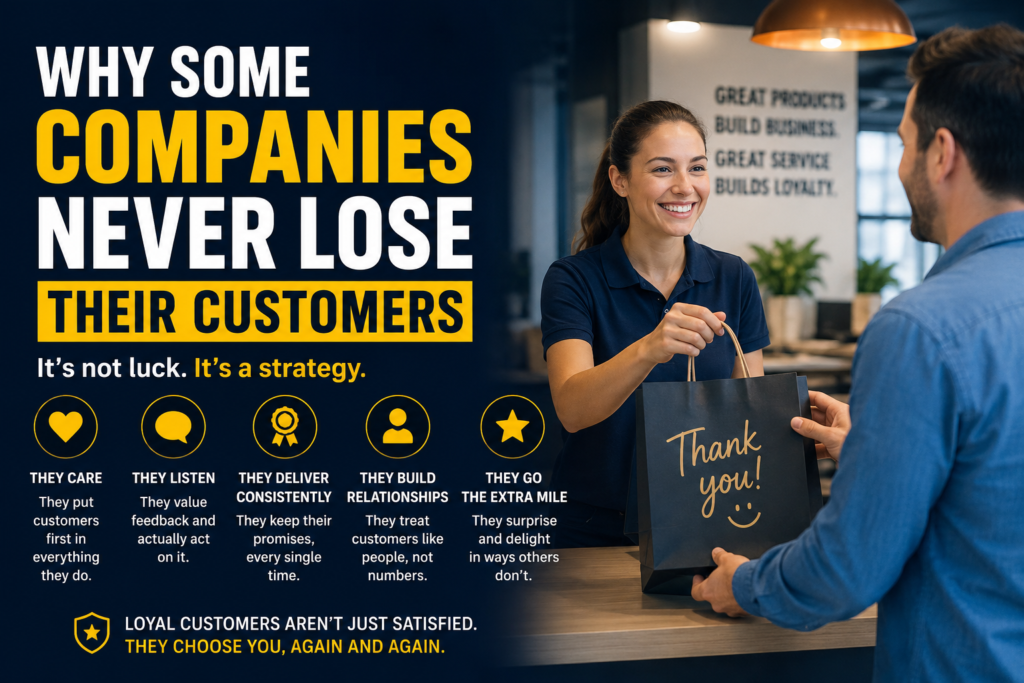
Around the same time, my card got declined at Costco because I’d forgotten to update my payment method. The staff member at the register didn’t blink. She held my cart, walked me to customer service herself, and the whole thing took four minutes. I’ve renewed my membership every year since, even during a stretch when I barely used it enough to justify the cost.
Two companies, two completely different outcomes, and the difference had nothing to do with price. That contrast is what got me paying attention to why some businesses keep customers for decades while others bleed them out constantly, no matter how much they spend on marketing to replace the ones who leave.
This isn’t theory I read in a business book and repeated back. It’s stuff I’ve noticed as a customer for years, plus lessons I picked up running my own small content business and watching which vendors and platforms I stuck with versus dropped without a second thought.
The Math Nobody Talks About
Here’s something that changed how I think about this entirely. Research from Bain and Company, the firm that originally popularized customer loyalty metrics, found that increasing customer retention by just five percent can increase profits anywhere from 25 to 95 percent, depending on the industry.
That number sounds exaggerated until you break down why. Acquiring a new customer costs money through ads, discounts, and onboarding effort. A retained customer skips most of that cost and often spends more over time because trust builds gradually. Loyal customers also tend to refer others, which is marketing you don’t have to pay for directly.
Companies that understand this stop treating customer service as a cost to minimize and start treating it as the actual product. Costco’s return policy, famously generous even years after purchase, isn’t charity. It’s a calculated bet that trust pays for itself many times over.
It’s Never Really About the Product
I used to assume companies kept customers because their product was simply better than the competition. Working with clients across different industries over the years taught me that’s rarely the deciding factor.
Chick-fil-A doesn’t have a monopoly on good chicken sandwiches. Plenty of competitors make comparable food. What Chick-fil-A built a reputation around is consistency and warmth at every single location, down to the “my pleasure” response that became a genuine brand signature rather than a corporate script that feels hollow.
Apple products get criticized constantly for being overpriced compared to competitors with similar specs. None of that criticism stops people from lining up for new releases, because the relationship customers have with Apple isn’t really about specs at all. It’s about a consistent experience across every touchpoint, from the store layout to the unboxing to how quickly a broken screen gets fixed at the Genius Bar.
The lesson buried in both examples is the same. Product quality gets you in the door once. Everything else determines whether someone stays.
The Real Reasons Customers Stick Around

They Feel Known, Not Processed
Nothing kills loyalty faster than feeling like a ticket number instead of a person. I noticed this clearly with two software tools I used for my business around the same time.
One company’s support team responded to every email with a generic template, regardless of what I’d actually asked. The other company’s support rep referenced something specific from my account history without me having to explain my situation from scratch. Guess which subscription I kept for three more years and which one I canceled within a month.
Small businesses can actually beat large corporations here, since a local bakery remembering your regular order carries the same emotional weight as a personalized customer service interaction from a massive company with far more data at its disposal.
Problems Get Fixed Without a Fight
Every company makes mistakes. Orders get delayed, products break, promises don’t get kept. The companies that retain customers aren’t the ones who never mess up. They’re the ones who fix it fast and without making the customer beg for a resolution.
Amazon built enormous loyalty partly through this exact principle. A damaged package usually gets replaced or refunded within minutes of a chat conversation, no lengthy investigation required. That fast resolution turns a potential complaint into a reason to trust the company more than before the problem even happened.
Compare that to companies where getting a refund requires three phone calls, a manager escalation, and a two week wait. Even if the refund eventually comes through, the experience itself damages the relationship more than the original problem did.
Value Feels Fair, Not Extracted
Customers can sense when a company is trying to squeeze extra money out of them through hidden fees, confusing pricing, or constant upsells. That feeling erodes trust even when the core product is good.
Costco again is a useful example here, since the membership fee model works specifically because customers feel like they’re getting genuine value in exchange, rather than getting nickel and dimed at checkout with surprise charges. Transparent pricing builds a kind of trust that aggressive upselling actively destroys.
Two Kinds of Loyalty, and Only One Lasts
Not all customer loyalty is built the same way, and this distinction took me a while to actually notice in my own habits. Some loyalty exists purely because switching costs money, time, or hassle. Other loyalty exists because a customer genuinely prefers the relationship, independent of price.
Airlines rely heavily on the first kind through mileage programs that make switching feel like throwing away accumulated value. It works, to a point, but the moment a cheaper or more convenient option appears, that loyalty often evaporates fast, since it was never really about affection for the brand in the first place.
Emotional loyalty behaves completely differently. I’ve paid more for a product specifically because I trusted a company more than a cheaper competitor, not because switching was inconvenient, but because the relationship itself felt worth protecting. That kind of loyalty survives price increases far better than the mileage-program kind ever does.
Companies chasing long term retention need to know which kind they’re actually building. A rewards program bolted onto poor service creates the fragile kind. Genuine trust built through consistent, fair treatment creates the kind that survives a competitor’s aggressive discount campaign.
The Role of Employees in Keeping Customers Around

Nearly every loyalty story I’ve mentioned so far actually traces back to how a company treats its own employees, which isn’t something most customers consciously connect, but it shows up constantly once you start looking for it.
Costco pays notably higher wages than many retail competitors, and turnover reflects that difference significantly. Employees who stick around longer know store policies better, handle problems more confidently, and treat customers with a kind of ease that comes from actually being comfortable and secure in their job.
Compare that to companies with high turnover and minimal training, where every interaction feels slightly uncertain because the person helping you started two weeks ago and hasn’t learned enough yet to solve anything beyond the most basic requests. Customers absolutely notice that inconsistency, even if they can’t articulate exactly why one location feels better than another.
This connects back to something a former manager once told me that stuck around longer than most business advice does. Customers rarely get treated better than a company’s own employees are treated internally. It sounded a little too tidy as a rule at the time, but years of noticing this pattern across different businesses hasn’t disproven it once.
Digital Habits That Quietly Build or Break Trust
A huge amount of loyalty now gets decided online before a customer ever calls support or walks into a store, and this is an area a lot of businesses still underestimate.
Response time on social media matters more than most companies realize. A brand that answers a public complaint within an hour, with an actual solution rather than a generic apology, signals something completely different than a brand that goes silent for three days before responding with a copy-pasted message.
Review responses carry similar weight. I’ve chosen a restaurant specifically because the owner responded thoughtfully to a negative review instead of ignoring it or arguing defensively in the comments. That single interaction told me more about how they’d handle an actual problem than any five star review could.
Email habits matter too, in a subtler way. Companies that email constantly with unrelated promotions train customers to ignore everything they send, including the messages that actually matter, like a shipping delay notice or an account security alert. Restraint in marketing communication, oddly enough, tends to build more trust than aggressive frequency does.
How Smaller Businesses Can Compete With Bigger Budgets
It’s easy to assume loyalty-building tactics only work at Amazon or Costco scale, with resources far beyond what a small business can access. That assumption doesn’t hold up once you look at what’s actually driving the loyalty in these examples.
Personal recognition costs nothing beyond attention. A small shop owner remembering a regular’s order doesn’t require a CRM system, just consistency and genuine interest in the people walking through the door.
Fast problem resolution doesn’t require a massive support team either. It requires giving whoever answers the phone or the front counter enough authority to fix a small issue without needing three layers of manager approval first.
Transparent pricing costs nothing at all beyond the discomfort of being upfront about a price increase instead of burying it in fine print. If anything, small businesses have an advantage here, since customers generally expect more warmth and less corporate distance from a local operation than from a large chain.
The businesses I’ve stayed loyal to longest, across every category from coffee shops to software tools, share this pattern regardless of their size. Bigger budgets make certain things easier, but they don’t create the fundamentals of trust. Attention, consistency, and fairness do that work, and none of those three things require a large marketing department to execute.
What the Data Says About Loyalty Programs Specifically
Loyalty programs deserve a closer look here, since nearly every company on earth seems to have one now, yet not all of them actually move the needle on retention. Research from firms studying loyalty program effectiveness consistently finds that points and rewards alone rarely retain customers who’ve had a genuinely bad service experience.
A generous points system attached to slow support or confusing policies tends to retain customers only until a competitor offers a comparable program with better underlying service. The points become a tiebreaker, not the actual reason someone stays.
The loyalty programs that seem to work best pair rewards with something harder to copy, like Costco’s membership model tied directly to genuinely better prices and return policies, rather than points that exist mostly to make cancellation feel like a loss. A rewards program layered on top of an already trustworthy relationship reinforces loyalty. A rewards program used to paper over a shaky underlying experience rarely fixes the actual problem driving customers away.
Step by Step: Building the Kind of Loyalty That Lasts
Whether you’re running a business or just trying to understand why certain brands earn your loyalty, here’s the pattern that shows up across nearly every example I’ve studied or experienced directly.
Step one: map out every point where a customer interacts with your business, from the first ad they see to a support call two years later. Most companies only optimize the sales moment and ignore everything after.
Step two: fix your slowest, most frustrating process first. For most businesses that’s returns, refunds, or support response time. This is usually the highest leverage fix available.
Step three: train your team to solve problems on the spot rather than escalating everything through layers of approval. Empowered employees create faster resolutions, which directly builds trust.
Step four: collect feedback consistently, not just when something goes wrong. Tools like Delighted or SurveyMonkey make simple Net Promoter Score surveys easy to run after every purchase or support interaction.
Step five: personalize where it actually matters, not everywhere. A CRM like HubSpot or Salesforce can flag repeat customers automatically, which lets your team greet a returning customer with context instead of starting from zero every time.
Step six: be transparent about pricing and policies before a customer commits, not after. Surprise fees revealed at checkout do more damage to long term trust than losing a sale upfront ever would.
Step seven: measure retention specifically, not just new sign ups. A business that’s constantly replacing lost customers with new ones is treading water, even if total revenue looks stable on paper.
Real Examples Worth Studying
Zappos and the Customer Service Legend
Zappos built its entire early reputation on customer service stories that sound almost unbelievable until you look them up. Free returns with no time limit for years, support calls that lasted hours without anyone rushing the customer off the phone, and a company culture that explicitly prioritized the customer experience over efficiency metrics.
That approach cost money in the short term. Longer calls mean fewer calls handled per hour. But the loyalty and word of mouth it generated turned into one of the most recognized customer service reputations in retail history, eventually leading to Amazon acquiring the company specifically to learn from that culture.
Trader Joe’s and Predictable Delight
Trader Joe’s operates with a smaller product selection than most grocery chains, which sounds like a disadvantage until you notice how deliberately curated that selection feels. Employees seem genuinely happy rather than performing scripted friendliness, and the constant rotation of seasonal products keeps regular customers checking in even though the overall footprint of the store barely changes.
I’ve watched friends drive twenty minutes past closer grocery stores specifically to shop there, not because it’s dramatically cheaper, but because the experience feels consistently pleasant in a way competitors don’t replicate.
A Local Example That Taught Me the Most
The most useful lesson actually came from a small coffee shop near my old apartment, not a massive corporation. The owner remembered regulars by name within a couple of visits and would occasionally comp a pastry if a drink took longer than usual to make, without ever being asked.
That shop had worse parking than the chain coffee place two blocks away and slightly higher prices. It didn’t matter. The relationship built through small, consistent gestures outweighed both those disadvantages completely, and the shop stayed packed every single morning I walked past it.
Mistakes Companies Make That Push Customers Away
Treating every customer interaction as a script to follow rather than a genuine conversation. Customers can tell the difference between a rep reading from a screen and someone actually listening.
Making cancellation or returns deliberately difficult, assuming friction will reduce churn. It usually just converts a quiet cancellation into a public complaint on social media instead.
Prioritizing new customer discounts so heavily that loyal, long term customers end up paying more than someone who just signed up. This specific pattern, sometimes called the loyalty penalty, has burned plenty of subscription services and insurance companies who eventually had to walk it back after backlash.
Ignoring feedback until it becomes a pattern too large to fix quietly. Small complaints addressed early rarely become the kind of viral customer service horror stories that damage a brand permanently.
Measuring only acquisition numbers in company reporting, while retention quietly erodes in the background unnoticed until revenue growth suddenly stalls for reasons leadership can’t immediately explain.
What I Changed in My Own Business After Learning This
Running a smaller content operation taught me these lessons apply at any scale, not just massive corporations. I used to respond to client questions with the fastest possible answer, prioritizing speed over context.
Switching to responses that referenced our actual project history, even briefly, changed how clients described working with me in casual conversation. Small adjustment, noticeably different reaction.
I also used to treat pricing changes as something to announce quietly and hope nobody noticed. Being upfront about pricing adjustments in advance, along with a clear reason, actually reduced pushback compared to when I tried to handle it quietly and got caught explaining myself defensively after the fact.
None of these changes required a big budget. They required paying attention to where trust was quietly leaking out of otherwise fine interactions.
Final Thoughts
That cable company still crosses my mind occasionally, mostly as a reminder of how replaceable a business becomes the moment price is the only thing holding a customer in place. Costco, on the other hand, earned a kind of loyalty that a competitor’s better deal probably couldn’t shake loose at this point.
The companies that never lose customers aren’t necessarily the ones with the best product on paper. They’re the ones who made every interaction feel like it respected the person on the other end of it, consistently, long after the sale was already made.
That’s a harder thing to build than a discount code, but it’s also a lot harder for a competitor to copy. Price wars end the moment someone undercuts you. Trust built over years of consistent, fair treatment doesn’t disappear just because a competitor drops their prices for a season. It’s the kind of advantage that compounds quietly in the background, showing up as renewals, referrals, and customers who never bothered comparing options elsewhere in the first place.