

A few years ago at an audio show, I got invited to sit down and listen to a pair of headphones that cost more than my car. Someone at the Sennheiser booth waved me over, plugged in a marble-based amplifier the size of a small end table, and let a pair of electrostatic headphones settle onto my ears.

I expected to feel nothing beyond mild curiosity. Instead I sat there for a solid ten minutes listening to a jazz recording I’d heard a hundred times before, hearing details in it I’d genuinely never noticed. A cymbal decay. A breath before a vocal line. Small things, but noticeably clearer than anything my regular setup at home had ever produced.
That headphone system, the Sennheiser HE1, launched at roughly fifty five thousand dollars in a limited production run of three hundred units a year, and current pricing has climbed toward seventy thousand depending on the year and dealer. Sitting there, I understood for the first time why someone would actually pay that, rather than assuming it was pure marketing nonsense.
That experience got me curious about the rest of this world. Gadgets priced high enough to sound like typos. Some of them, like that headphone system, genuinely earn their price through engineering. Others are closer to jewelry that happens to also make phone calls. This list covers both categories, along with what I’ve learned about telling the difference.
Why Some Gadgets Cost More Than a House
Three things drive extreme gadget pricing, and once you know them, the sticker shock makes a lot more sense.
Rare materials push cost up fastest. Gold, platinum, and diamonds don’t care what they’re attached to, and once a manufacturer starts encrusting a phone or a game console in them, the underlying electronics become almost irrelevant to the final price. A phone worth fifteen million dollars isn’t fifteen million dollars smarter than the base model it started from. It’s carrying fifteen million dollars worth of jewelry.
Hand assembly is the second driver. The Sennheiser system I tried gets built individually by a single technician, with each unit taking roughly two weeks of dedicated labor rather than rolling off a factory line. That kind of production timeline makes mass market pricing impossible from the start, since a factory producing thousands of units a day spreads engineering and tooling costs across every single unit, while a workshop producing three hundred units a year has almost no way to bring the per unit cost down.
Scarcity closes the loop. When only three units of something exist, or only ten, the price isn’t really about manufacturing cost anymore. It’s about how much a specific buyer is willing to pay to own one of a handful that will ever be made. Economists sometimes call this the Veblen effect, where demand for a product actually increases as price increases, since the price itself becomes part of what the buyer is purchasing. A cheaper version of the exact same gold Nintendo console wouldn’t hold the same appeal to the specific buyer looking for exclusivity rather than better gameplay.
Understanding these three forces separately makes almost every entry on lists like this one make sense, rather than reading as pure marketing absurdity.
The Gadgets That Actually Justify the Price
The Sennheiser HE1 Headphone System

Beyond my own listening experience, what stands out about this system is that the marble housing isn’t decoration for its own sake. Manufacturers chose Carrara marble specifically because its density prevents structure-borne vibration from interfering with the internal vacuum tube amplifier, the same reason sculptors have prized that stone for centuries. The engineering reasoning behind the price holds up even if the number itself still feels absurd.
The Triton Submersible
Not every expensive gadget on this list exists purely to impress people at a party. The Triton 3300 series submersible represents functional extreme engineering, built to carry a pilot and two passengers comfortably to depths over three thousand feet, and it’s become a genuine favorite among scientists and documentary film crews specifically because of its spacious cabin, oversized cargo capacity, and reliability at depth.
A submersible like this costs millions, but the price buys something a luxury phone case never could, actual functional access to parts of the ocean almost nobody gets to see firsthand. That distinction matters when you’re deciding whether a price tag represents craftsmanship or just decoration.
High End Professional Cameras
Professional camera gear rarely makes headlines the way diamond phones do, but the price tags rival them easily. Medium format cameras used by fashion and commercial photographers regularly run past forty thousand dollars once you add the right lens, and cinema cameras used on major film productions can run into six figures once rigged out for a full production.
These prices buy sensor technology, color accuracy, and durability under repeated professional use that a consumer camera simply isn’t built for. Nobody buys one of these to show off on social media. They buy it because a client’s entire ad campaign depends on image quality that a phone camera can’t replicate.
A detail worth mentioning here is how differently this equipment gets financed compared to a luxury phone. Studios and production companies typically rent this kind of gear by the day rather than purchasing it outright, spreading a six figure camera package across dozens of projects rather than absorbing the full cost on a single job. That rental economy is a big part of why prices in this category stay so high, since manufacturers know a working professional will rent the exact tool needed for a specific shoot rather than compromising on a cheaper alternative.
The Gadgets That Are Mostly About Bragging Rights
The Stuart Hughes iPhone 5 Black Diamond
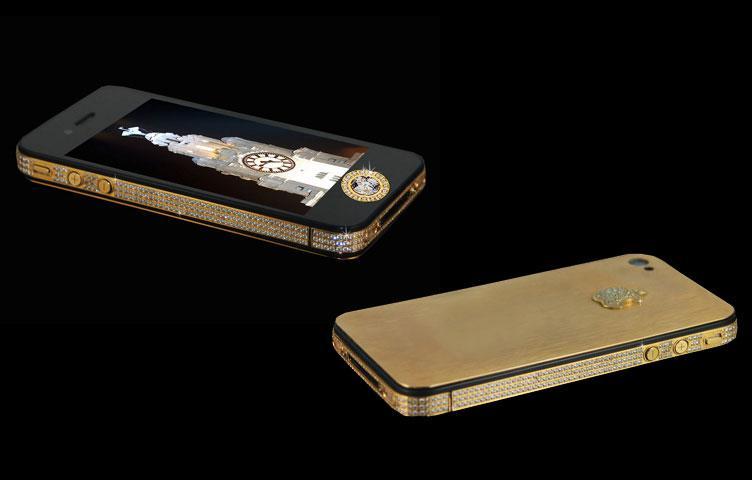
This is the gadget most people picture when they hear “most expensive phone in the world.” Designer Stuart Hughes built this iPhone using two hundred grams of solid gold and replaced the home button with a large flawless black diamond, pricing the finished device north of fifteen million dollars.
Nothing about the internal technology differs from a regular iPhone 5 sold at any carrier store. The entire price comes from the materials wrapped around it, which makes this a genuine piece of jewelry that happens to also send text messages.
The Nintendo Wii Supreme
Gaming got the same luxury treatment through this gold plated Wii console, built using roughly two and a half kilograms of twenty two carat gold along with nineteen carat diamonds worked into the front buttons, limited to only three units ever produced and priced at nearly half a million dollars before the line was discontinued.
The console inside performs identically to any standard Wii you could have bought at a regular retail price at the time. The half million dollar price tag exists entirely because of scarcity and materials, not performance.
The Vertu Signature Cobra
Luxury phone maker Vertu built this feature phone in partnership with jeweler Boucheron, embedding hundreds of rubies into a cobra design wrapped around the phone’s body, with emerald eyes finishing the look and a price tag near two and a half million yuan, somewhere in the range of a few hundred thousand dollars depending on the exchange rate at time of sale.
This phone predates smartphone era touchscreens entirely, which tells you everything about where the value actually sits. Nobody bought this for the operating system.
Hart Audio’s Gold Speakers
Rounding out the jewelry-disguised-as-electronics category, these speakers came in three tiers depending on metal choice. A single eighteen carat gold pair sold for close to five million dollars, a small run of silver pairs sold for a few hundred thousand each, and a larger run of bronze pairs still carried a price well into five figures.
Audio enthusiasts who’ve actually compared these to standard high end speaker setups generally note the sound quality doesn’t scale anywhere near proportionally with the price increase between the bronze and gold versions. The gold buys exclusivity more than it buys better sound, which is a pattern worth remembering any time a product’s marketing leans harder on the materials than on measurable performance.
The Falcon Supernova iPhone Collection
Custom phone maker Falcon has built several diamond covered iPhones over the years, including versions finished in platinum, rose gold, and yellow gold, each studded with hundreds of individually set stones. One of the more famous versions is reportedly owned by a member of a prominent Indian business family, which tells you something about who actually buys these phones. It’s rarely the general public window shopping on a manufacturer’s website. It’s typically a very small number of already extremely wealthy buyers looking for a specific kind of status object rather than a better phone.
Custom Built Home Theater Systems
Away from portable gadgets entirely, some of the highest price tags in consumer electronics belong to fully custom home theater installations, where a single unfolding screen, a calibrated speaker array, and a dedicated room acoustics setup can run past a million dollars combined. Unlike the diamond phones, this category usually does deliver a genuinely different experience, since a properly calibrated large format screen and a room built specifically around sound reflection produces picture and audio quality that a standard living room television simply can’t replicate, regardless of how much you spend on the television itself.
Step by Step: How to Actually Evaluate an Expensive Gadget
If a gadget’s price tag ever makes you wonder whether it’s actually worth it, here’s the process worth running through before assuming either extreme.
Step one: separate the base technology from the materials wrapped around it. A gold iPhone case doesn’t change what’s happening inside the chip, while a genuinely rebuilt amplifier or transducer system does.
Step two: check whether the price buys functional capability or purely aesthetic exclusivity. A submersible that reaches new depths justifies its cost differently than a phone case covered in rubies.
Step three: look at production numbers. Extremely limited runs, sometimes as small as one to three units, drive price up regardless of what’s actually being manufactured.
Step four: research whether independent reviewers who’ve actually used the product note real performance differences, rather than relying purely on marketing copy from the manufacturer itself. A quick search for hands on reviews, rather than press release language, usually reveals which category a product actually falls into fairly quickly.
Step five: consider resale and collector value separately from functional value. Some of these gadgets hold or increase in value specifically because of rarity, which is a different kind of worth than day to day usability.
Step six: ask what specific problem the price is solving. Better sound, deeper ocean access, sharper images, or simply the ability to say you own one of three that exist. All of those are valid reasons to pay a premium, but they’re not the same reason, and knowing which one applies changes whether a price tag reads as reasonable or purely theatrical.
Real Examples From My Own Research and Experience
The Headphone Demo That Changed My Mind
Before that audio show, I assumed anything priced anywhere near that headphone system had to be pure marketing, aimed at people with more money than sense. Actually sitting down and hearing the difference shifted my thinking considerably, even though I still can’t justify buying one myself. It taught me that dismissing every expensive gadget outright is just as lazy as assuming price always equals quality.
Comparing a Rental Camera to My Regular Setup
A friend who does commercial photography let me hold a medium format camera rig worth more than a car for an afternoon. The image files it produced, viewed side by side with my regular mirrorless camera, showed a genuinely noticeable difference in dynamic range and color depth, especially in shadow detail. That comparison made the price tag feel less abstract, since I could see exactly what it was buying with my own eyes rather than just reading spec sheets. It also made me a lot more sympathetic to photographers who justify these kinds of purchases to clients who assume any camera should produce the same result.
Researching the Diamond Phone Market
Digging into the diamond encrusted phone world for this article, I expected to find some hidden functional justification buried somewhere in the marketing. There isn’t one. These products exist purely as luxury objects, and the companies making them are refreshingly upfront about that once you dig past the initial press release language. Knowing that going in changes how you should evaluate a purchase like this entirely.
A pattern that showed up repeatedly while researching this piece was how many of these companies pivot away from tech marketing language entirely and toward the same vocabulary jewelers use. Terms like flawless clarity, carat weight, and hand set stones show up far more often in these product descriptions than anything about processors or battery life, which itself is a pretty clear signal about what’s actually being sold.
Common Mistakes People Make Reading About These Gadgets
Assuming every expensive gadget must contain groundbreaking technology, when a large portion of extreme pricing comes purely from precious materials layered onto standard internals.
Treating rarity and quality as the same thing. A product limited to three units isn’t automatically better engineered than something mass produced, even though scarcity alone drives collector prices upward.
Ignoring maintenance and support costs when comparing extreme luxury gadgets to their standard counterparts. A one of three custom built device often has no warranty infrastructure or repair network behind it at all.
Assuming these prices represent typical retail markup rather than genuine one-off manufacturing costs, hand labor, and material sourcing that scale completely differently than mass produced electronics.
Confusing investment value with functional value. Some of these items do appreciate over time as collectibles, but that’s a completely different kind of return than getting better sound, sharper photos, or genuinely improved performance out of daily use.
Assuming a high price today guarantees the same value tomorrow. Limited edition electronics don’t always hold value the way a rare watch or a piece of art might, since the underlying chips and software inside a device age and become obsolete regardless of how much gold surrounds them.
Why Some of These Prices Actually Drop Over Time
A detail that surprised me while researching this list is how differently these two categories age. Purely decorative luxury gadgets, like the diamond phones, tend to lose almost all resale value once the underlying model becomes outdated, since a five year old phone with diamonds on it is still, at its core, a five year old phone. The materials retain some value if melted down or resold as jewelry, but the electronics inside become essentially worthless the moment newer hardware arrives.
Functional extreme engineering ages very differently. A submersible built to reach specific ocean depths doesn’t become obsolete the way a phone does, since the physics of pressure and buoyancy haven’t changed even if the electronics onboard eventually get upgraded. Camera bodies hold value better too, particularly medium format systems, since professional photographers care more about sensor size and optics than about chasing the newest release the way phone buyers often do.
This distinction matters for anyone actually considering a purchase in this range, rather than just reading about it out of curiosity. A gadget’s price tag tells you what someone paid on day one. It doesn’t tell you what the thing will still be worth, or still capable of doing, five years down the road.
Final Thoughts
I still think about that ten minutes with the Sennheiser system more than I probably should for a piece of audio gear I’ll likely never own. It reframed how I think about extreme pricing generally, since it proved that at least some of these gadgets earn their reputation through genuine engineering rather than pure spectacle.
Most of what tops these lists, though, is closer to wearable jewelry that happens to include a circuit board. Nothing wrong with that, if someone has the money and wants to own something only two or three people on earth will ever hold. It’s just worth knowing which category a price tag actually belongs to before assuming either that it’s all marketing, or that it’s automatically worth every dollar. A little research, the same way you’d research any purchase, usually reveals the answer faster than the marketing copy ever will.
The technology inside most of these devices is often identical to something you could buy for a fraction of the price. What you’re actually paying for, most of the time, is the story behind the object rather than anything it does differently once it’s in your hand.
Next time a headline promises the world’s most expensive version of some ordinary device, it’s worth pausing on that distinction before either dismissing it entirely or assuming the price alone proves it’s better. Sometimes it genuinely is. Often it’s a gold case wrapped around the exact same chip everyone else already owns, priced for a buyer who wanted the case more than the chip in the first place.