
Last spring I opened my kitchen junk drawer looking for a pair of scissors and instead found three dead phone chargers, a rubber band ball the size of a fist, and a receipt from a restaurant that closed down two years earlier. That drawer had basically become a time capsule of chaos, and honestly, it was a pretty accurate summary of my entire house at that point.
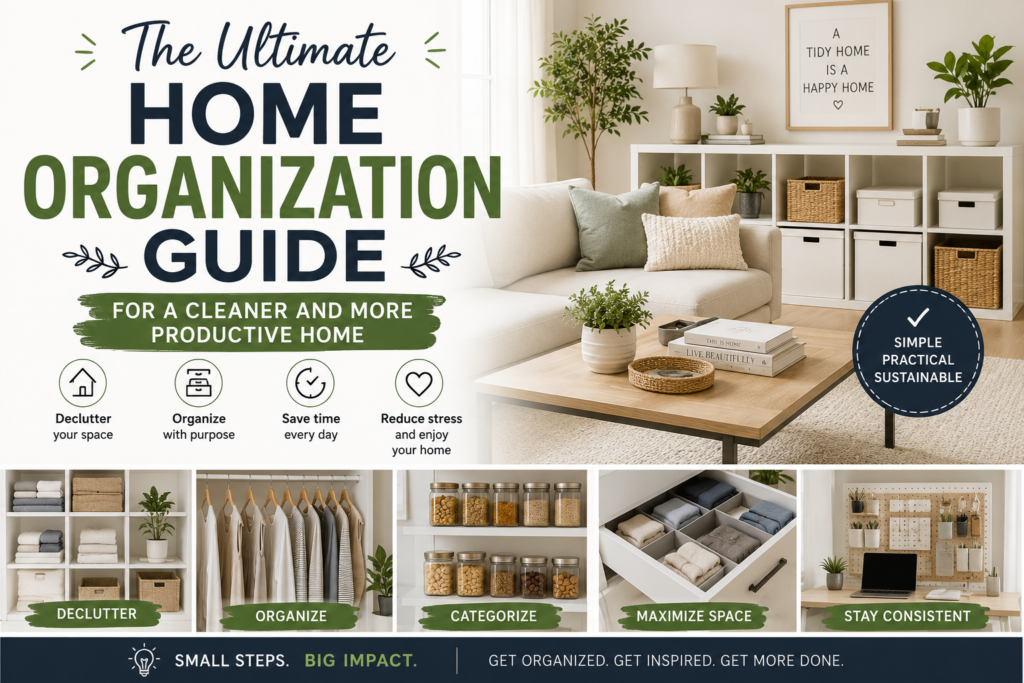
That drawer was my wake-up call. Not a dramatic one, just a quiet realization that my home had slowly filled up with clutter while I wasn’t paying attention, and it was starting to drain my energy every single day without me fully noticing why.
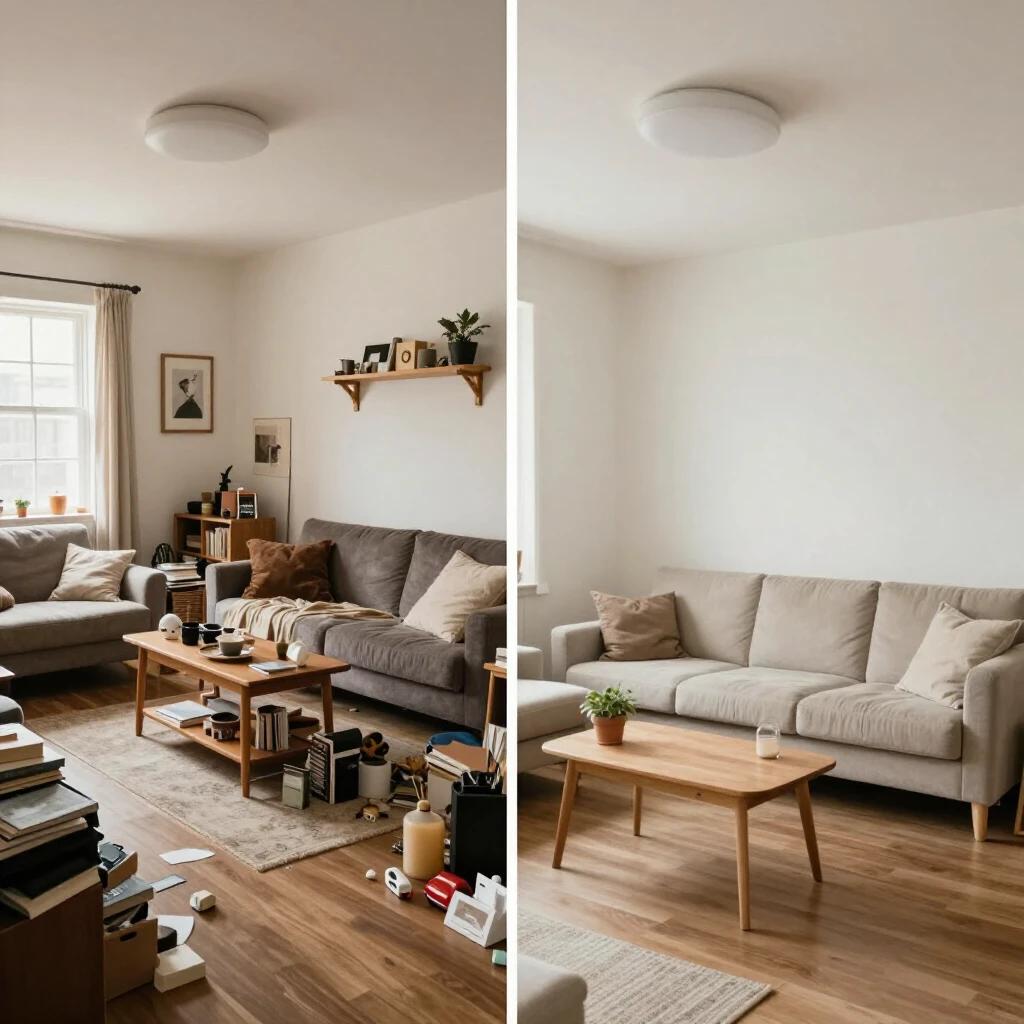
If your home feels like it’s working against you instead of for you, this guide walks through everything I learned turning my own cluttered, chaotic space into something that actually functions. No unrealistic before-and-after magazine spreads here, just practical steps that worked for a regular busy household.
Why Clutter Affects More Than Just Your Space
Before diving into the how-to part, it helps to understand why disorganization messes with more than just your countertops.
Researchers at UCLA studied clutter’s effects on families and found that visual chaos in a home actually raises stress hormone levels, particularly in women managing household tasks. That tracked completely with my own experience. Walking into a messy living room after a long day made my shoulders tense up before I even sat down.
Clutter also eats time in ways people rarely calculate. Searching for misplaced keys, mail, or paperwork adds up to hours every month. Once I started tracking it out of curiosity, I realized I was losing almost twenty minutes a day just hunting for things that had no proper home.
Getting Started Without Feeling Overwhelmed
Pick One Room, Not Your Whole House
My first attempt at organizing involved trying to tackle the entire house in a single weekend. By Saturday afternoon, every room had piles of stuff pulled out and nowhere to put it back, and I ended up more overwhelmed than when I started.
Choosing just one room, or even one drawer, works far better. Momentum builds naturally once you finish something completely instead of leaving five projects half done.
The Three-Box Method
This simple system saved me more time than any app or gadget ever did. Grab three boxes or bins and label them Keep, Donate, and Trash.
Go through each item in a space and place it in one of the three boxes without overthinking it. The moment you start debating an item for more than a few seconds, put it in Donate. That rule alone cut my decision fatigue dramatically.
Set a Timer for Focus
Organizing can stretch out endlessly if you let it. I started using a simple kitchen timer set for twenty-five minutes, working in focused bursts similar to the Pomodoro technique people use for work tasks.
Knowing there’s a clear stopping point made starting far less intimidating, especially on days when motivation was low.
Room-by-Room Organization Tips That Actually Work
The Kitchen
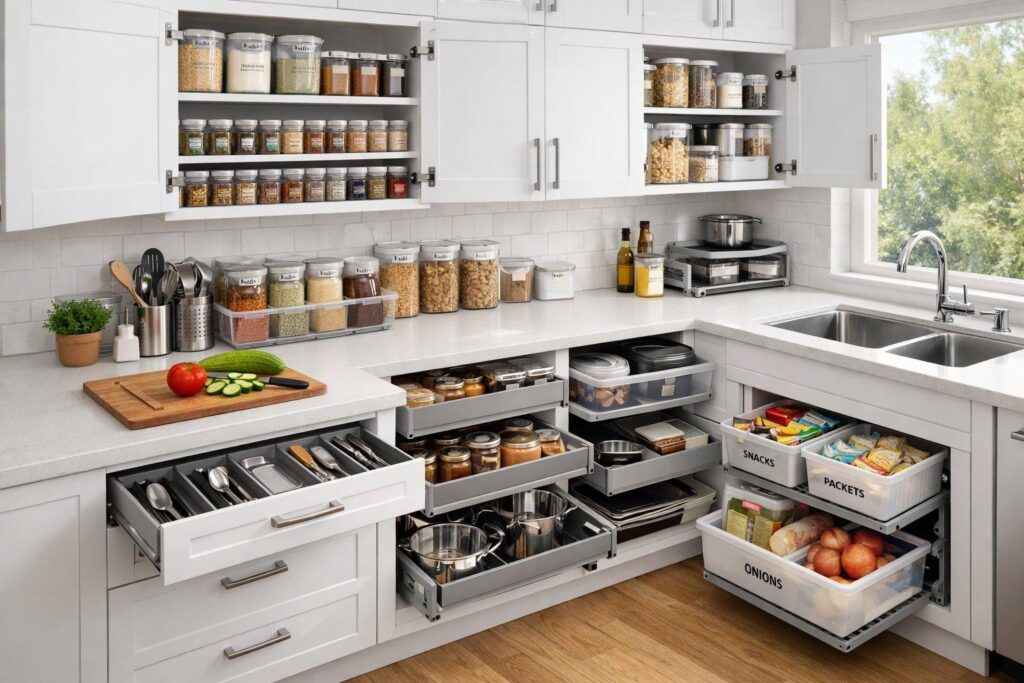
Kitchens accumulate clutter faster than almost any other room, mostly because everyone in the house uses it multiple times a day.
Start with your countertops. Anything that isn’t used daily should move into a cabinet or drawer. I kept only my coffee maker and knife block visible, and the difference in how spacious the kitchen felt was almost immediate.
Drawer dividers made a bigger difference than I expected. A basic set from Target or IKEA turned my chaotic utensil drawer into something that actually stays organized, even with three kids constantly grabbing spoons.
For pantry organization, clear bins with labels changed everything. I use a simple label maker, the Brother P-Touch, though even masking tape and a marker works fine if you’re not ready to invest in extra tools yet.
The Bedroom Closet
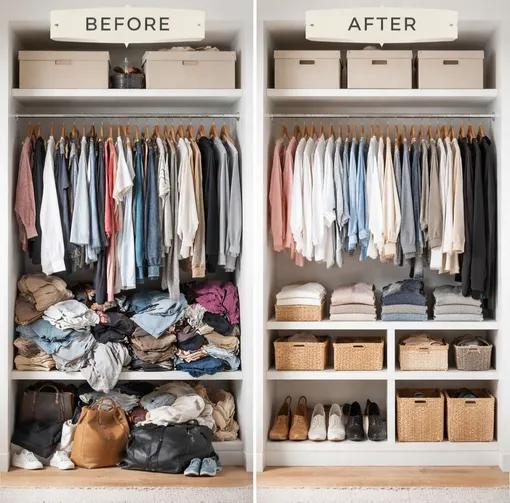
Closets tend to become storage for clothes we no longer wear but feel guilty getting rid of. I used to be the worst offender here, holding onto jeans from a decade earlier just in case.
The hanger trick helped me finally let go. Turn every hanger backward at the start of the season. Each time you wear an item, turn its hanger the right way. After three months, anything still backward gets donated, since it clearly isn’t part of your regular rotation.
Vacuum storage bags work well for out-of-season clothing, especially bulky sweaters or winter coats, freeing up significant closet space during warmer months.
The Home Office or Workspace
Paper clutter destroyed my productivity for years before I created an actual system for it. Every incoming document now goes into one of three folders, labeled Action Needed, Reference, and Recycle.
Digital clutter matters just as much as physical mess. I started using Google Drive folders organized by year and category, which made finding old documents dramatically faster than searching through random desktop files.
A cable organizer under my desk solved another annoying problem, tangled cords that made cleaning nearly impossible. Something as simple as binder clips labeled with tape works if you don’t want to buy a dedicated product.
The Bathroom
Bathrooms are small, but clutter multiplies fast due to half-used products nobody wants to throw away.
I did a full sweep of expired products, checking dates on sunscreen, makeup, and medications, which alone freed up almost a third of my cabinet space. Clear stackable bins keep similar items grouped together, making it far easier to see what you actually own instead of buying duplicates you forgot you had.
The Entryway
This is the first space guests see, and for years mine was a disaster of shoes, mail, and random bags piled by the door.
Adding a small bench with storage underneath completely changed the flow of our mornings. Shoes have a designated spot, mail goes directly into a small tray instead of the counter, and keys hang on hooks mounted at eye level so nobody wastes time searching for them before heading out.
Step-by-Step Plan for a Full Home Reset
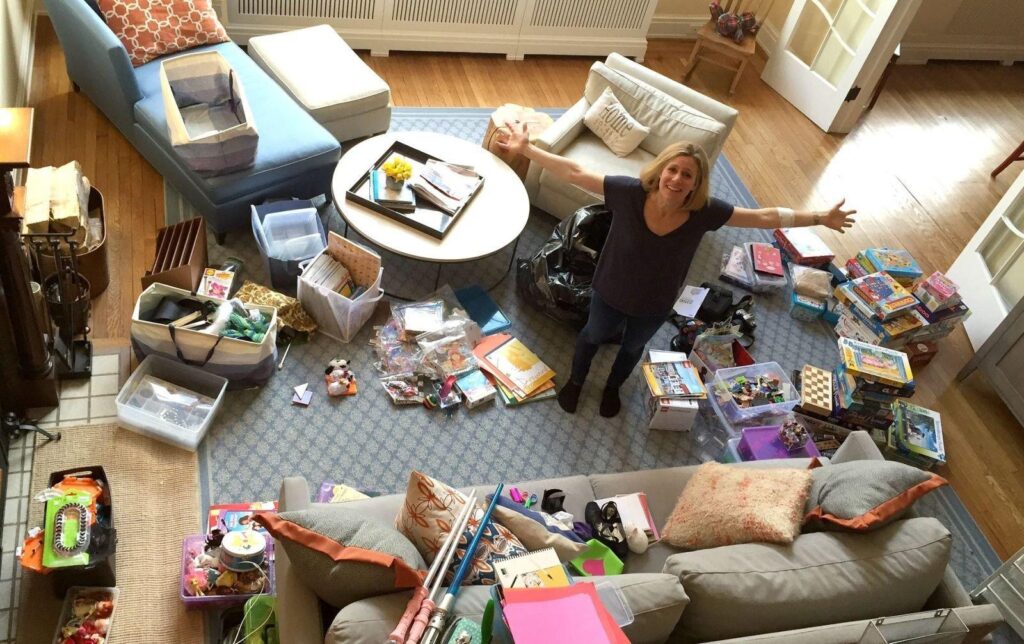
Here’s the actual sequence I followed over several weekends, broken into manageable chunks.
Step one: Declutter before organizing anything. Buying storage bins before removing unnecessary items just gives clutter a nicer container to hide in.
Step two: Sort by category, not by room. Gathering every pair of scissors, every phone charger, or every notebook from across the house at once reveals just how much duplicate stuff tends to accumulate.
Step three: Assign a home for everything. Every item needs one specific spot. If something doesn’t have a clear home, it will end up back on a random surface within days.
Step four: Involve the whole household. Organizing solo while everyone else keeps their old habits leads to backsliding fast. I got my kids involved by assigning them their own labeled bins for toys, which made cleanup something they could manage independently.
Step five: Build in a maintenance routine. Spend ten minutes each evening doing a quick reset, putting things back in their designated spots before bed. This single habit prevents small messes from snowballing into full weekend cleanup projects.
Real Examples From My Own Home
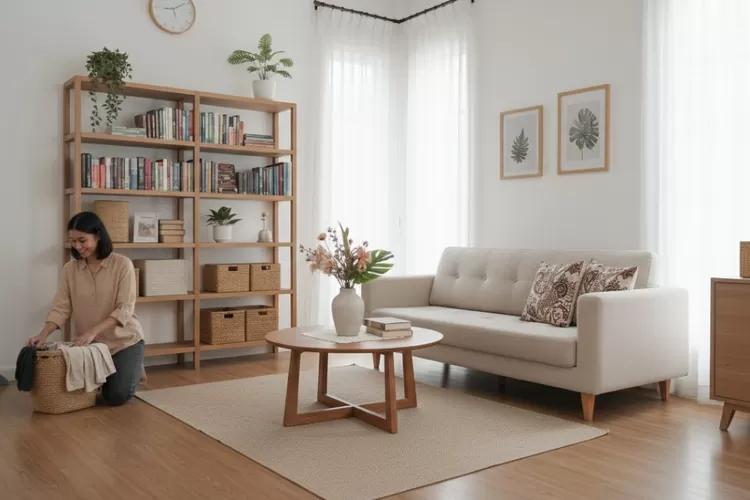
My daughter’s room used to take an hour to clean every single week because none of her toys had designated storage. After adding labeled bins with simple picture labels for kids who can’t read yet, cleanup time dropped to about ten minutes, and she started doing most of it herself.
My husband’s home office desk was permanently buried under papers until we added a simple inbox tray system. Six months later, that same desk stays clear almost every day, mostly because the system requires almost no extra effort to maintain.
Our garage went from an unusable storage disaster to a functional space after installing a pegboard system for tools. Everything hangs visibly now, which also made it obvious when something was missing or needed replacing.
Common Mistakes to Avoid
Buying storage solutions before decluttering. Bins and baskets feel productive, but they often just organize clutter you should have removed entirely.
Trying to create a Pinterest-perfect system on day one. Elaborate color-coded systems often collapse within weeks because they take too much daily effort to maintain. Simple systems survive real life far better than complicated ones.
Ignoring digital clutter. A messy desktop, overflowing inbox, and disorganized phone apps drain mental energy just as much as physical mess, even though they’re easy to overlook.
Skipping the maintenance step. Organizing once and never revisiting the system guarantees clutter creeps back within a couple months. Small daily upkeep matters more than the big initial overhaul.
Keeping items out of guilt rather than usefulness. Gifts you never use, clothes that don’t fit, and duplicate kitchen gadgets take up space for no real benefit. Letting go gets easier with practice.
Tools and Apps Worth Considering
A handful of tools made a genuine difference beyond basic bins and labels.
Sonos or a simple Bluetooth speaker made organizing sessions far more enjoyable, since decluttering to music felt less like a chore and more like an activity.
The app Sortly helps track household inventory, particularly useful for garages or storage units where it’s easy to forget what you actually own.
For donation drop-offs, apps like GiveBackBox let you print a free shipping label and send unused clothing directly to charity partners without even leaving the house.
Final Thoughts
That junk drawer eventually got its reset too, though it took me almost two months to work through the rest of the house first. These days it holds exactly what a junk drawer should, batteries, tape, and a couple of pens, nothing more.
A genuinely organized home doesn’t happen through one intense weekend of effort. It happens through small consistent choices, a designated spot for every item, a quick nightly reset, and a willingness to let go of things that no longer serve a purpose.
Start with one drawer, one shelf, or one corner this week. Notice how much lighter that small space feels once it’s sorted, and let that feeling carry you into the next area. Your whole house doesn’t need to transform overnight. It just needs one finished spot to prove the system actually works for your life.