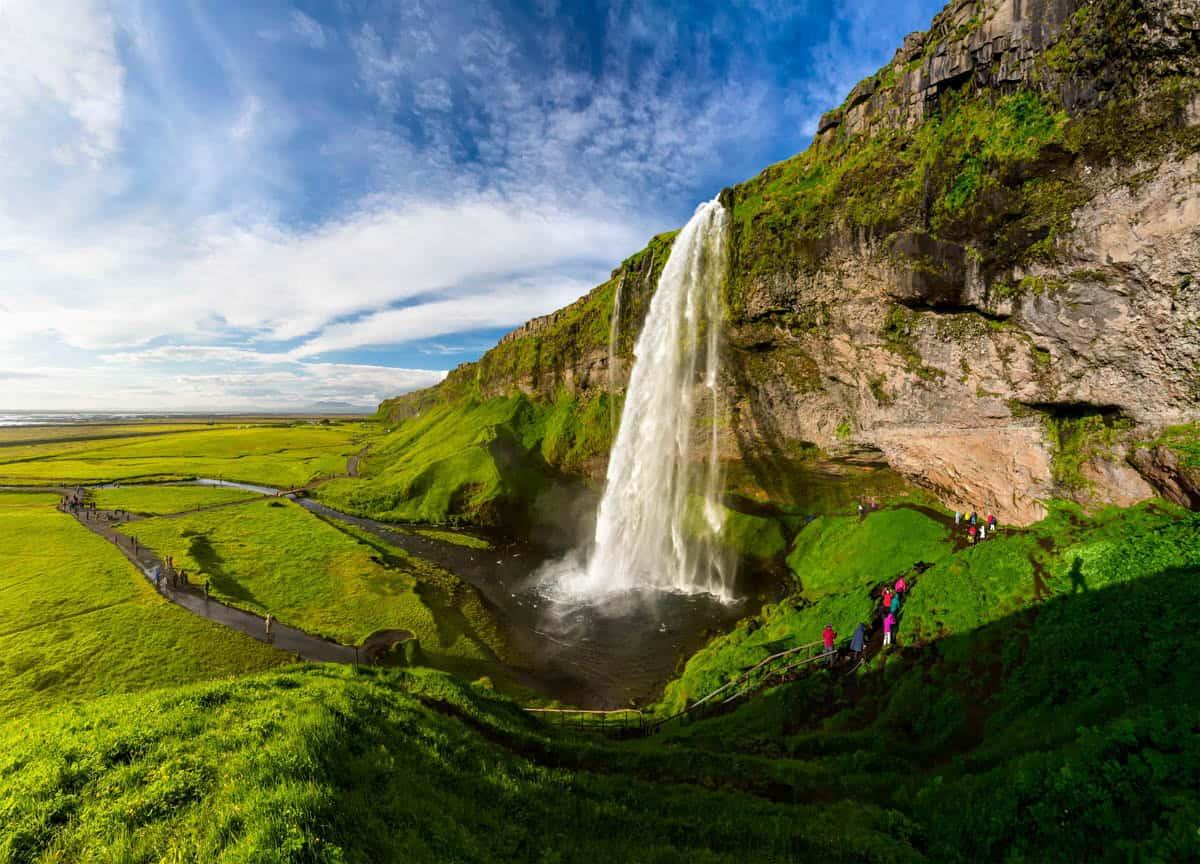

I remember standing at the edge of a salt flat in Bolivia, phone in hand, trying to get a photo that would somehow explain what I was looking at. The ground stretched white and flat in every direction until it just met the sky, and there was no obvious line between the two. My brain kept insisting I was looking at snow, or maybe a frozen lake, even though the guide had explained ten minutes earlier that it was salt, and that it doesn’t rain there for months at a time.
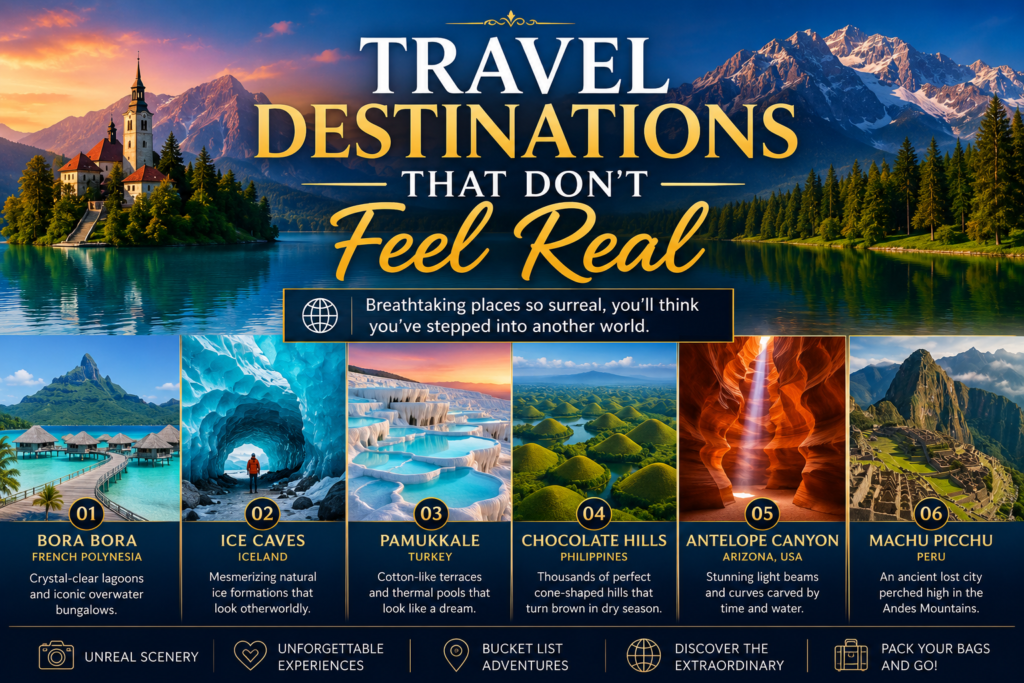
That trip changed how I plan travel completely. Before Bolivia, my vacations were the usual list: a beach, a city with good food, maybe a mountain town if I wanted hiking. Nice trips, but forgettable in a specific way, the kind where you look back at photos six months later and can’t quite remember which beach was which.
Since then I’ve chased a different kind of destination on purpose. Places that don’t look like they belong on this planet. Places where the photos genuinely aren’t edited, even though everyone assumes they are.
This list comes from actual trips, actual mistakes, and a few moments where I stood somewhere and just laughed out loud because it looked so unreal.
Why These Places Hit Differently
There’s a reason certain landscapes stop us in our tracks while others, even beautiful ones, don’t. Psychologists studying awe, including research out of UC Berkeley’s Greater Good Science Center, describe it as the feeling you get when something is so vast or unusual that your brain has to update its understanding of what’s possible.
A normal beach is beautiful, but your brain already has a category for beach. A pink lake breaks that category. A canyon carved into swirling red and orange stone breaks it too. That mismatch between expectation and reality is what creates the feeling people describe as otherworldly.
I didn’t understand this consciously back in Bolivia. I just knew that standing there felt different from every other vacation photo I’d ever taken. Chasing that feeling on purpose turned into a genuine hobby, and eventually into a habit of researching places most travel lists skip over in favor of the same ten cities everyone already knows.
There’s also a quieter reason these places stick with people long after the trip ends. Awe researchers have found that experiences of genuine wonder tend to shrink our sense of self temporarily, making everyday worries feel smaller by comparison for a while afterward. That’s a fairly clinical way of describing something most travelers already sense instinctively, which is that a handful of trips end up feeling different from the rest, in a way that has nothing to do with how many photos you took or how nice the hotel was.
Worth saying clearly, since it matters more than most travel content admits: places like these often sit in fragile ecosystems or communities with limited infrastructure for large numbers of visitors. Staying on marked paths, hiring local guides instead of skipping them to save a few dollars, and following posted rules around formations like the rainbow mountains or the marble caves isn’t just about following instructions. It’s about making sure these places still look the way they do the next time someone stands there trying to get their own impossible photo.
The Salt Flats of Uyuni, Bolivia
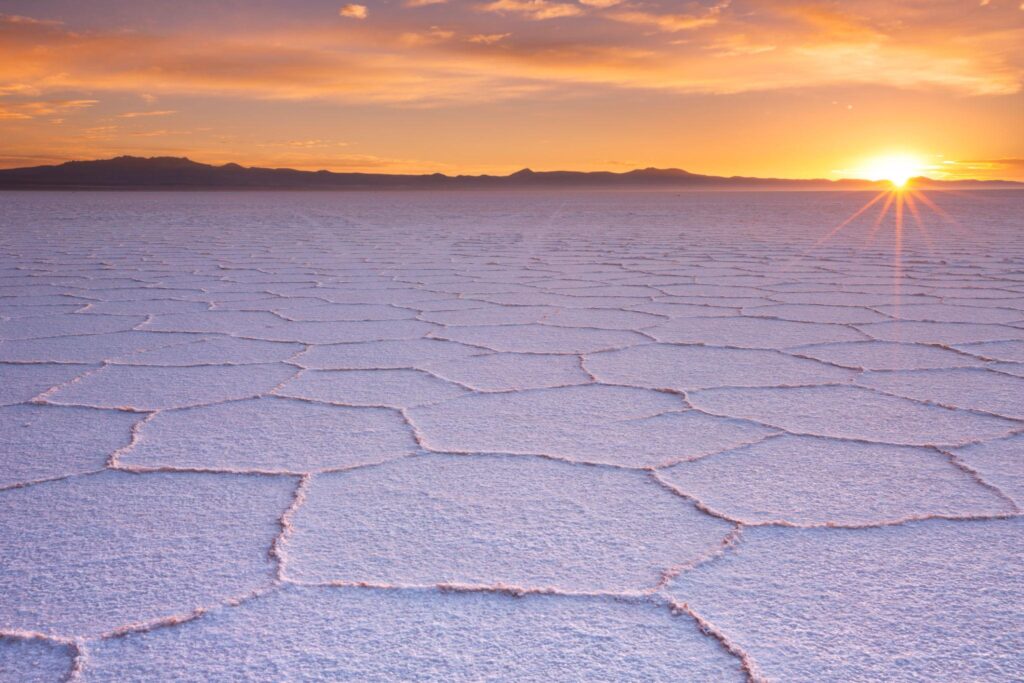
Salar de Uyuni is the largest salt flat on earth, and during the rainy season a thin layer of water sits on top of the salt crust, turning the entire landscape into a mirror. Sky above, sky below, and you standing somewhere in the middle of both.
Getting the reflection shot everyone posts online takes more effort than it looks. Timing matters. Early morning or late afternoon gives you softer light and calmer water, since wind ripples ruin the mirror effect within minutes. Our guide checked wind conditions the night before and adjusted our departure time accordingly, which taught me that these photos aren’t luck, they’re planning.
A mistake I made was assuming any shoes would work. The salt water ruins regular sneakers fast, and most tour groups wear rubber boots for good reason. I learned this after squelching around in ruined running shoes for the rest of the trip.
Tours typically leave from Uyuni town, and most travelers book through local operators rather than international ones, since prices drop significantly and the guides know the salt conditions better than anyone.
Zhangye Danxia Landform, China
Nobody believes these mountains are real the first time they see a photo, myself included. Zhangye Danxia in Gansu Province looks like someone took a paintbrush to the hillsides, with stripes of red, orange, yellow, and green running through the rock in wide bands.
The colors come from mineral deposits laid down over millions of years, compressed and then pushed upward by tectonic activity, which created the layered, almost sedimentary cake look the park is known for. Geology, not filters, despite what half the comments under these photos assume.
Visiting requires timing around light too. Midday sun washes out the colors, while early morning or late afternoon light makes the stripes noticeably more vivid. The park has designated viewing platforms along a boardwalk system, since walking directly on the formations damages them and is actually prohibited.
I went in July expecting fewer crowds than peak season and was wrong. Locals travel here heavily during summer school breaks, so if crowds bother you, aim for shoulder months like April or October instead.
Socotra Island, Yemen
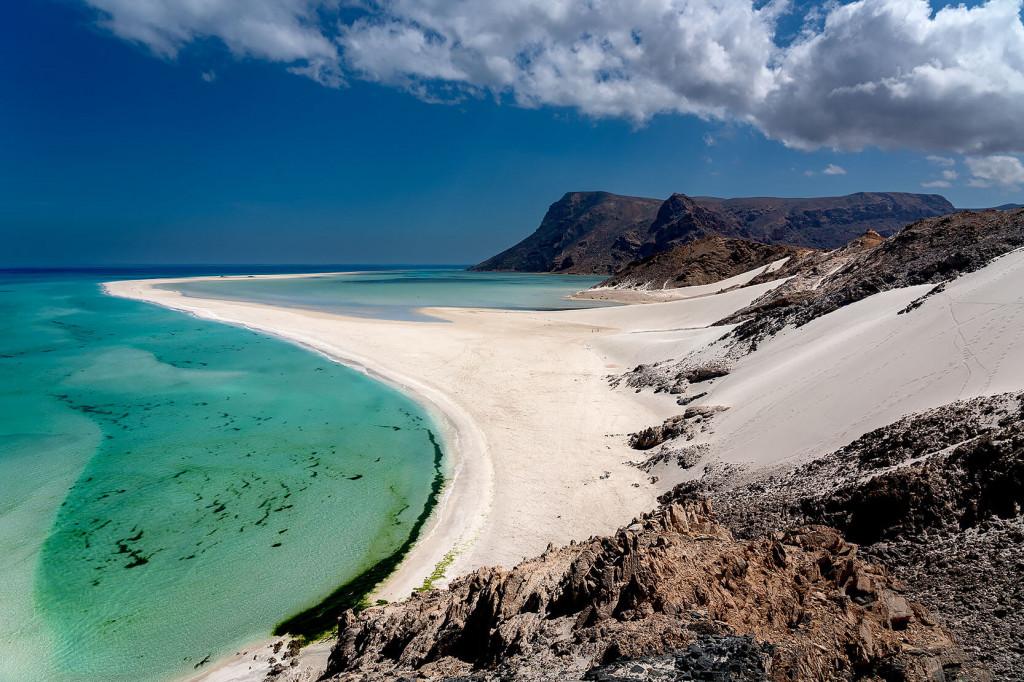
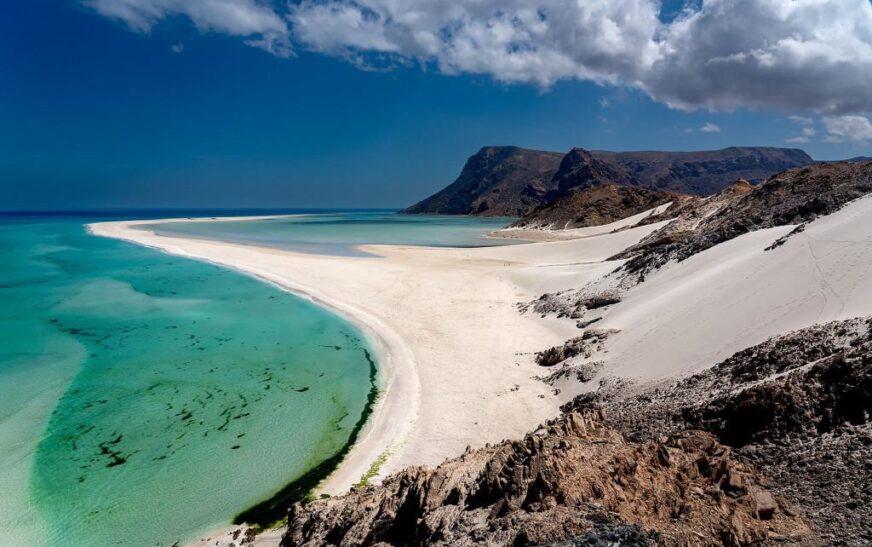
This one surprised me more than any other place on this list. Socotra sits off the coast of Yemen in the Arabian Sea, isolated long enough that a huge percentage of its plant life exists nowhere else on earth.
The dragon’s blood trees are the reason most people learn about this island in the first place. They look like giant upside down umbrellas, wide flat canopies balanced on thick trunks, spread across rocky hillsides in a way that looks more like concept art than an actual forest.
Practical reality check here, because I think travel content skips this too often. Access to Socotra depends heavily on the security situation in Yemen, and travel advisories change. Anyone considering this trip needs to check current government travel advisories directly before booking anything, since conditions shift and this isn’t a destination to approach casually. When accessible, trips typically go through specialized tour operators with local guides who handle logistics that would be difficult to manage independently.
The Door to Hell, Turkmenistan
Officially called the Darvaza gas crater, this one earned its nickname honestly. A natural gas field collapsed into an underground cavern decades ago, and the resulting crater has been burning continuously since, glowing orange against the desert dark like something out of a film set.
Seeing it at night is the entire point. During the day it’s a large hole with smoke rising out of it, which honestly doesn’t look like much. After sunset, the flames become visible and the whole crater glows, and that’s when it earns the reputation.
Getting there involves a fairly remote drive through the Karakum Desert, and most visitors go through organized tours since Turkmenistan has notoriously strict visa requirements and independent travel is genuinely difficult. I’d budget extra time for visa processing specifically, since this was the single slowest part of planning the entire trip.
Marble Caves, Chile and Argentina Border
Lake General Carrera sits on the border between Chile and Argentina, and along its edges are caves carved from solid marble by thousands of years of wave action. The rock swirls in blues and grays that shift depending on water levels and the angle of the sun.
You can only really see these by boat or kayak, since the caves sit directly against the waterline. Kayaking gets you closer and lets you actually enter some of the smaller formations, though boat tours are more accessible if paddling isn’t your thing.
Water level changes the whole appearance of these caves throughout the year. Higher water in the summer months creates more vivid blue reflections bouncing off the marble, while lower water exposes more of the cave structure but with less of that saturated color effect. I went in a lower water month and got a completely different experience than the photos that convinced me to book the trip, which was a good lesson in checking seasonal conditions rather than just booking based on someone else’s photo.
Reed Flute Cave, China
This limestone cave near Guilin has been a tourist attraction for over a thousand years, and modern colored lighting has turned the natural stalactite and stalagmite formations into something that looks almost digitally rendered.
Calling this a cave undersells it. Colored lights bounce off rock formations reflected in still underground pools, creating symmetrical, almost kaleidoscope-like scenes around nearly every corner. It photographs beautifully, though in person the scale and quiet of the space hits differently than any photo can capture.
Visiting is straightforward compared to most places on this list, with regular tours running from Guilin and no special permits or complicated logistics required. It makes a good starter destination for anyone easing into this kind of travel, since it delivers the same disbelief factor as the more remote spots on this list without the visa headaches or multi-day travel legs.
A short boat ride down the Li River nearby pairs naturally with a Reed Flute Cave visit, since the karst mountains along that stretch of river carry a similarly surreal quality above ground that the cave delivers below it.
Pamukkale, Turkey
Pamukkale translates to cotton castle, and standing at the base of these terraces makes the name obvious immediately. White mineral pools cascade down a hillside in Turkey, formed over thousands of years by calcium-rich hot springs flowing over the rock and hardening into these bright, almost snow-like shelves.
Walking barefoot across the terraces is required, both to protect the fragile mineral surface and because shoes aren’t allowed on most of the walkway sections anyway. The ground has a strange texture underfoot, somewhere between chalk and smooth stone, warmed by the mineral water still flowing through parts of it.
Crowds build fast here since it’s an easy day trip from several major Turkish tourist areas. Arriving right at opening time, before the tour buses show up, made a genuine difference in how much of the terraces we had to ourselves for photos without dozens of strangers in the background.
Above the terraces sits Hierapolis, an ancient Roman spa city with ruins scattered across the hillside, which turns this into a combined history and landscape stop rather than just a single attraction.
Tools and Apps That Made Planning Easier
A handful of tools kept showing up across every one of these trips, and they’re worth mentioning specifically since generic travel advice often skips the planning side of unusual destinations.
Google Flights became my starting point for almost every trip on this list, mainly for its flexible date search, which helped me find cheaper windows that also happened to line up better with seasonal conditions like rainy season in Bolivia.
Rome2Rio helped enormously with the more remote legs of these trips, since it maps out combinations of flights, buses, and trains that regular flight search tools don’t show, which mattered a lot for reaching places like the Marble Caves that don’t have a direct airport nearby.
Windy.com became essential specifically for the salt flat trip, since checking wind forecasts a few days out let our guide plan around the calmest possible conditions for that mirror reflection effect.
For visa research, checking the destination country’s official embassy website directly, rather than third party visa services, gave more accurate and current information every time, especially for a country like Turkmenistan where requirements shift without much notice.
A basic offline maps app, like Maps.me or the offline mode in Google Maps, saved me more than once in areas with unreliable cell signal, particularly around the Chile and Argentina border crossing where data coverage disappeared for long stretches.
Step by Step: Planning a Trip to a Surreal Destination
Getting to these places takes more intention than booking a standard beach vacation, so here’s the process that’s worked for me across multiple trips.
Step one: research the actual conditions required for the “wow” version of the place, not just its general existence. Salt flat reflections need rain season. Rainbow mountains need soft light. Fire craters need darkness. Know your timing before booking flights.
Step two: check government travel advisories for anywhere with political instability. Sites like the US State Department travel advisory page or the UK’s equivalent give current, reliable information rather than outdated blog posts.
Step three: use flight comparison tools like Google Flights or Skyscanner to check multiple nearby airports, since remote destinations often connect better through a secondary city than the obvious major hub.
Step four: book local guides rather than large international tour companies where possible. Local operators tend to know timing, weather patterns, and access rules better, and your money stays closer to the community you’re visiting.
Step five: pack for the specific terrain, not generic travel weather. Salt flats need proper footwear. Desert craters need layers for dramatic day to night temperature swings. Research this specifically rather than assuming your regular travel gear covers it.
Step six: build in flex days. Weather dependent experiences like reflections or clear night skies don’t always cooperate on the exact day you show up, and having one buffer day dramatically increases your odds of getting the experience you traveled for.
Step seven: manage photo expectations before you go. Most of these places look incredible in person even without achieving the exact viral photo you saw online, so don’t let a chase for one specific shot overshadow actually being present.
Real Scenarios From My Own Trips
Chasing the Salt Flat Reflection
My first attempt at Uyuni hit during a dry stretch with almost no standing water, which meant no mirror effect at all. I’d booked based purely on when flights were cheapest rather than researching rainy season timing. The trip was still worthwhile, since the sheer scale of white salt stretching to the horizon is impressive on its own, but I went back eighteen months later specifically during the wet season and finally got the reflection shot. Lesson learned: research the phenomenon’s actual season, not just general destination weather.
Underestimating a Remote Border Crossing
Getting to the Marble Caves meant crossing between Chile and Argentina in a fairly rural area, and I assumed the process would be as simple as crossing borders in Europe. It wasn’t. Limited crossing hours, slower processing, and a genuine language barrier at one checkpoint meant we lost half a planning day we hadn’t accounted for. Building in buffer time for border logistics in remote regions turned into a permanent rule after that trip.
Visa Timeline Surprise in Turkmenistan
I assumed a visa would take the standard week or two most countries require. Turkmenistan’s process took considerably longer and required documentation I hadn’t prepared in advance. Starting visa applications the moment a trip is even loosely confirmed, rather than waiting until flights are booked, saved me from a similar scramble on a later trip elsewhere.
Common Mistakes to Avoid
Booking flights before checking seasonal conditions for the specific phenomenon you’re chasing, whether that’s a reflection, a bloom, or a particular light angle.
Assuming remote or politically complicated destinations follow the same visa and border timelines as more commonly visited countries.
Packing generic travel gear instead of researching what the specific terrain actually demands, especially with salt, desert heat, or cave humidity.
Chasing one specific photo so hard that the actual experience of being somewhere incredible gets lost in the process.
Ignoring current travel advisories in favor of older blog posts or outdated forum threads, since political and safety conditions in some of these regions shift over time.
Skipping local guides to save money, when local knowledge often makes the difference between seeing the phenomenon everyone travels for and missing it by a day or an hour.
Underestimating how physically demanding some of these visits are, whether that’s walking barefoot across mineral terraces for hours or standing in desert heat waiting for sunset at a gas crater. Comfortable footwear and sun protection matter even at destinations that don’t look physically strenuous in photos.
Forgetting travel insurance for remote regions specifically. Standard policies sometimes exclude countries under certain advisory levels, so checking the fine print before booking a trip to somewhere like Yemen or Turkmenistan avoids an unpleasant surprise if anything goes wrong.
Final Thoughts
That salt flat in Bolivia is still the trip I think about most, mostly because it was the first time travel actually surprised me instead of just satisfying me. Nice beaches and good food are still worth booking, obviously, but there’s something different about standing somewhere your brain genuinely struggles to categorize.
None of these places require special skills or extreme adventure experience to visit. They require research, patience with logistics that don’t always go smoothly, and a willingness to plan around a phenomenon instead of just a location on a map.
The world still has corners that look unedited even when they’re not. Finding them just takes a little more digging than typing a city name into a search bar, and a willingness to build a trip around a specific window of weather or light instead of whatever dates happen to be convenient.
If there’s one habit worth carrying forward from all of this, it’s asking a different question before booking the next trip. Not just where should I go, but what does this place actually look like at its most itself, and when does that version show up. That question alone has led me to better trips than any list of top destinations ever has.