
The Secrets That Still Keep Researchers Up at Night
I still remember standing in front of a dusty museum case in my early twenties, staring at a chunk of carved stone with symbols nobody could fully read. The little plaque underneath just said “origin unknown.” That phrase stuck with me. Two words, and yet they opened up a rabbit hole I’ve been falling down ever since.
That’s the thing about history’s biggest mysteries. They’re not just trivia for pub quizzes. They’re open questions that actual archaeologists, historians, and researchers are still chasing today, sometimes with better tools than we had ten years ago, and sometimes with more questions than answers.
If you’ve ever gone down a late-night YouTube spiral watching documentaries about lost civilizations, or found yourself reading Wikipedia articles about ancient ruins at 1 a.m., this article is for you. I want to walk through some of the most fascinating unsolved puzzles from around the world, share what I’ve learned digging into them, and point out where the real research stands versus where the internet myths take over.
Why We Get Obsessed With Unsolved History
There’s a reason these stories grab us so hard. Our brains love a gap. When something is fully explained, we move on. But when there’s a missing piece, we can’t stop poking at it.
I noticed this myself when I first read about the Antikythera mechanism. A corroded lump of bronze pulled from a shipwreck near Greece in 1901 turned out to be an ancient analog computer used to track astronomical positions. Nobody expected the ancient Greeks to have built something that mechanically complex. It took over a century of research, and multiple rounds of X-ray imaging, before scientists understood how the gears actually worked.
That kind of slow reveal is addictive. You’re not just reading a fact. You’re watching detective work unfold across generations.
The Mysteries That Still Baffle Experts
Stonehenge and the Question Nobody Can Fully Answer
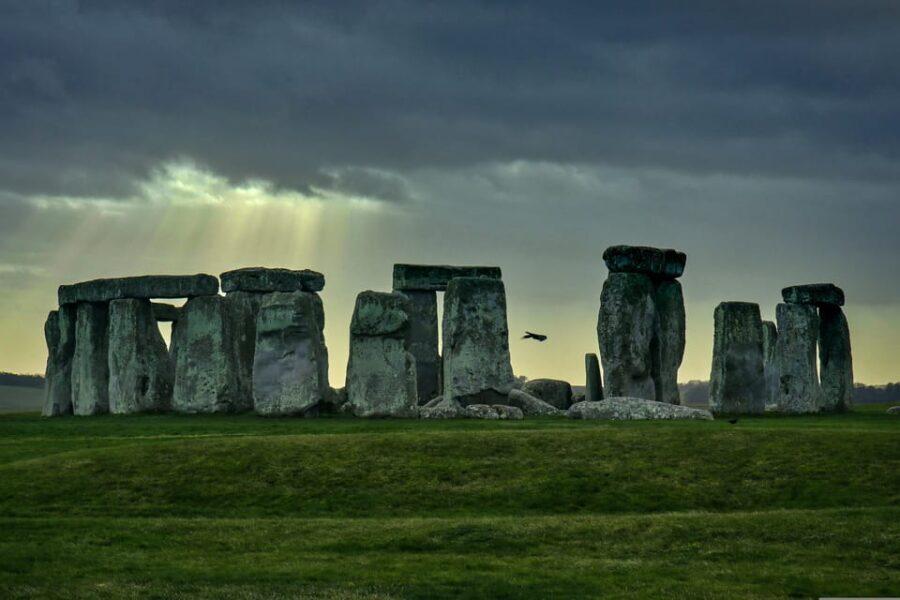
Everyone knows Stonehenge. Fewer people know just how much debate still surrounds it.
I visited the site a few years back, and honestly, standing there in person hits different than seeing photos. The stones are bigger than you expect, and the sheer effort required to move them becomes obvious the moment you’re next to them.
Researchers generally agree the bluestones came from Wales, roughly 150 miles away. What they don’t fully agree on is how prehistoric people without wheels or metal tools hauled multi-ton rocks that far. Theories range from sledges and log rollers to controversial ideas involving glacial movement.
A 2021 study using isotope analysis of cremated remains found at the site suggested some of the people buried there weren’t even local to the area, hinting that Stonehenge might have been a gathering place drawing visitors from across ancient Britain. That single detail changed how many archaeologists think about the site’s purpose. It might not have just been a monument. It might have been a meeting point.
The Voynich Manuscript
This one genuinely creeps me out a little, in a good way.
The Voynich Manuscript is a handwritten book, believed to date from the early 15th century, filled with text in a language or code nobody has ever translated. It also contains bizarre illustrations of plants that don’t match any known species, along with strange diagrams involving what look like astronomical charts and bathing women.
Cryptographers, including some who worked on breaking Enigma codes during World War II, have tried and failed to crack it. Some researchers now believe it might be a constructed language, a hoax, or even an elaborate exercise in glossolalia. Others insist it holds real information we simply haven’t found the key for yet.
I tried reading a digitized version once out of curiosity, available through Yale’s Beinecke Library website where the original is kept. Staring at those pages, you start to understand why so many smart people have lost sleep over it. The handwriting flows naturally, like someone writing in their native tongue, not scribbling nonsense.
The Nazca Lines
Flying over Peru’s desert plains, ancient people carved massive geoglyphs into the ground, shapes so large they can only be properly seen from the air. A hummingbird stretching over 300 feet. A spider. A monkey with a spiraling tail.
Since the people who made them, likely between 500 BCE and 500 CE, had no aircraft, the obvious question is why bother making art you can’t see from ground level.
Leading theories suggest the lines served ceremonial purposes tied to water and fertility rituals, since the region depended heavily on unpredictable rainfall. Others believe they functioned as astronomical calendars. A few fringe theories bring in outside forces entirely, though most archaeologists dismiss those firmly, pointing to plenty of evidence that ancient Andean cultures were fully capable of large-scale planning and construction without any help.
The Lost Colony of Roanoke
An entire English settlement, over 100 people, vanished from Roanoke Island in what’s now North Carolina sometime between 1587 and 1590. The only clue left behind was the word “CROATOAN” carved into a post.
No bodies. No signs of struggle. Just gone.
Modern researchers have used ground-penetrating radar and archival digging to explore theories including relocation to a nearby island, assimilation into local Native American communities, or death from disease and conflict. A 2020 archaeological dig on Hatteras Island uncovered European-style artifacts mixed with Native American items, supporting the theory that at least some colonists integrated with the local Croatoan people rather than dying off entirely.
Practical Ways to Explore These Mysteries Yourself
You don’t need a PhD or a plane ticket to dig into this stuff. Here’s how I personally got into it, step by step.
Start with documentaries that cite real sources. Skip the ones that lean heavily on dramatic music and vague narration. Look for shows or channels that interview actual archaeologists, like those featured on PBS or the BBC’s history programming.
Use primary databases when you can. Sites like the British Museum’s online collection or the Smithsonian’s digital archives let you look at actual artifacts and read curator notes, not secondhand summaries.
Follow actual researchers on social platforms. A handful of archaeologists and historians post regularly on Twitter and Instagram, sharing dig updates and debunking viral myths in real time. It’s a much better filter than random forum posts.
Cross-check anything wild you read. If an article claims a mystery is “finally solved,” search for the original study or press release. Half the time the headline oversells a much more modest finding.
Visit local museums, even small ones. I’ve found some of the best context in tiny regional museums that get overlooked. They often have detailed placards written by people who’ve spent decades studying one specific site.
Mistakes People Make When Getting Into This Stuff
I made most of these myself, so consider this a shortcut past my own trial and error.
Trusting sensational headlines over the actual study. A headline saying scientists “finally cracked” the Voynich Manuscript back in 2017 turned out to be based on one researcher’s unverified claim that most linguists rejected within weeks. Always read past the headline.
Assuming mystery means impossible. Plenty of once-unsolved puzzles, like how the Antikythera mechanism worked, got cracked eventually through patience and better technology. Don’t assume every gap in knowledge is permanent.
Ignoring the cultural context of a site or artifact. It’s easy to project modern assumptions onto ancient peoples. The idea that ancient civilizations needed outside help to build impressive structures often says more about our own biases than about their actual capabilities.
Skipping the boring academic papers. I know, they’re dense. But even skimming the abstract and conclusion of a real study will teach you more than ten clickbait articles combined.
Forgetting that mysteries evolve. New evidence changes things constantly. What was considered fact five years ago about Stonehenge’s construction has already shifted with newer isotope studies. Stay updated instead of repeating outdated claims.
A Few More Puzzles Worth Your Time
The Baghdad Battery
Discovered in the 1930s near modern-day Iraq, these clay jars containing a copper cylinder and iron rod date back roughly 2,000 years. Some researchers speculated they could have functioned as primitive batteries, though most mainstream archaeologists now believe they were more likely used for storing sacred scrolls or other everyday purposes. It’s a great example of how an exciting theory can spread widely even when the mainstream evidence points elsewhere.
The Dancing Plague of 1518
In Strasbourg, dozens of people reportedly danced uncontrollably for days, some until they collapsed or died from exhaustion. Historical records from physicians at the time describe the event in surprising detail. Modern historians lean toward a case of mass psychogenic illness, likely triggered by extreme stress, famine, and fear during a genuinely brutal period for the region. It remains one of the strangest documented events in European history.
The Georgia Guidestones
Less ancient but still deeply mysterious, this granite monument erected in the United States in 1980 carried inscriptions in multiple languages outlining guidelines for humanity’s future. Nobody ever confirmed who commissioned it beyond a pseudonym. The monument was destroyed by an explosion in 2022, and the case remains unsolved, adding another layer of intrigue to an already strange story.
What Keeps Bringing Me Back To This Topic
Honestly, it’s the humility of it all. Every time researchers think they’ve nailed something down, a new discovery flips the story. Ground-penetrating radar finds a hidden chamber. A translated fragment rewrites a timeline. DNA analysis on old bones reveals migration patterns nobody expected.
It’s a good reminder that certainty is often temporary, especially when you’re dealing with evidence buried under centuries of dirt, decay, and myth-making.
If you want a simple way to start your own exploration this weekend, pick just one mystery from this list. Read one solid academic summary about it, then watch one documentary, and compare the two. You’ll immediately notice which claims hold up and which ones got exaggerated somewhere along the way.
History rewards patience. The people who eventually crack these puzzles aren’t always the smartest in the room. Often they’re just the ones willing to keep looking at the same piece of stone, the same page of strange handwriting, or the same field of desert lines, a little longer than everyone else.
That persistence is really what all these mysteries have in common. Somewhere out there, someone is still staring at that same museum case I once stood in front of, still wondering what those two little words, origin unknown, are actually hiding.